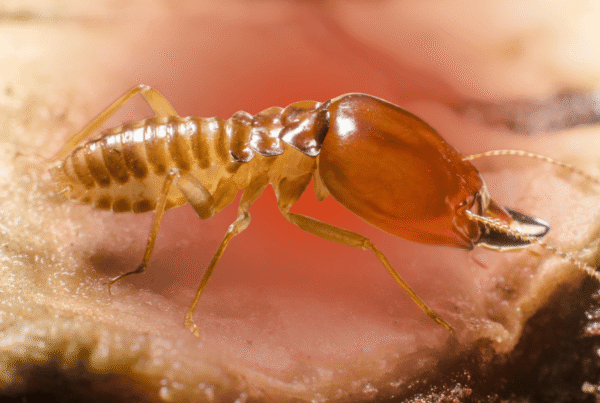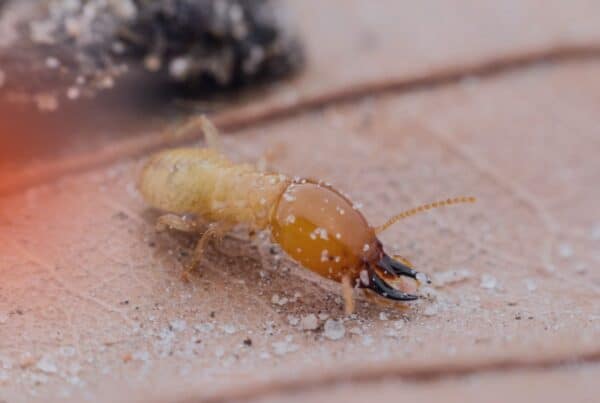
Carpenter ant droppings look like coarse, shredded sawdust mixed with bits of dead insects. Termite droppings look like tiny, hard pellets that are all the same size, a lot like coffee grounds or grains of sand. That one difference tells you which pest is in your wood and how fast you need to act.
If you just found a small pile of specks by a window frame or baseboard in The Woodlands, Conroe, or Spring, you are in the right place. Below, the Grand Slam Pest Control team shows you what each type of dropping looks like, where it shows up, what else can fool you, and what to do next.
What Do Carpenter Ant Droppings Look Like?
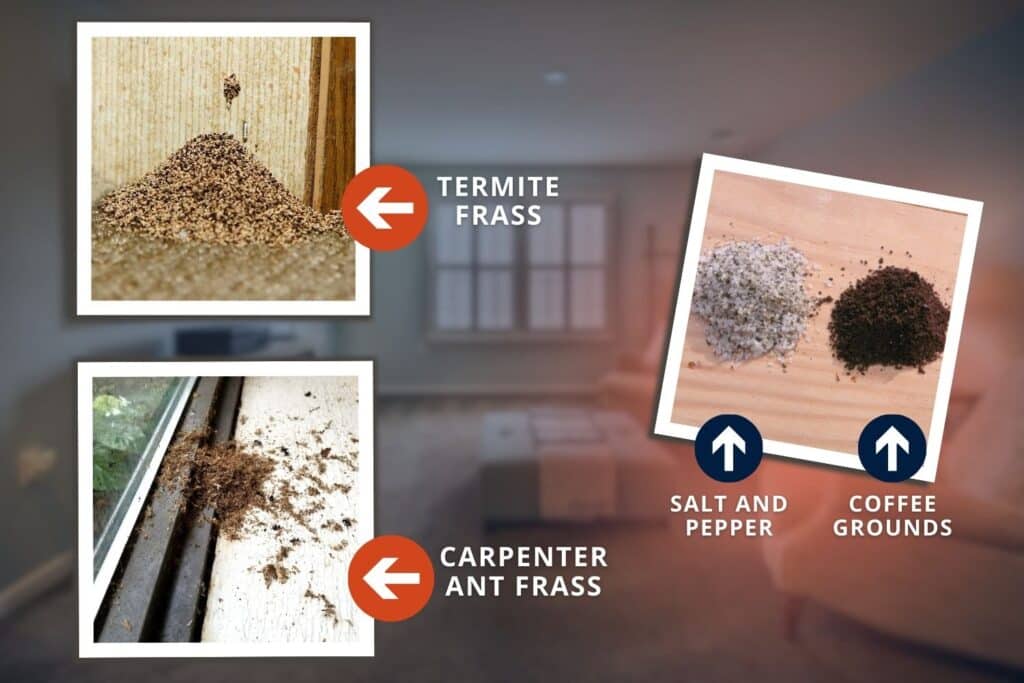
Carpenter ant droppings are rough, stringy wood shavings mixed with dead ant parts, soil, and other nest trash. Pest pros call this debris frass.
Carpenter ants do not eat wood. They chew tunnels, called galleries, to make room for a growing colony. Then they push the chewed wood and trash out through small openings in the surface. According to Texas A&M AgriLife Extension, carpenter ants usually nest in wood that is already soft from moisture, rot, or old termite damage.
What to look for:
- Rough, stringy texture, like shavings from a pencil sharpener
- Tan, gray, or the same color as the wood around it
- Tiny legs, wings, and heads mixed into the pile
- Crumbles easily when you touch it
- A cone-shaped pile right below a small opening in wood
Here is a simple test. Sweep up the pile and check the same spot in about a week. If fresh frass comes back, the colony is still active and still digging.
What Do Termite Droppings Look Like?
Termite droppings are tiny, hard, oval pellets that are almost all the same size and shape. They come from drywood termites, which live inside the wood they eat.
The Texas A&M Urban and Structural Entomology Program describes these pellets as about 1/32 of an inch long. They are usually the same color as the wood the termites are eating, so they can range from cream to dark brown. Under a magnifying glass, each pellet has ridged sides, one blunt end, and one pointed end.
Drywood termites push their pellets out of tiny round “kick-out” holes. Because the pellets fall from one small hole, they tend to pile up in neat little mounds. A tidy pile of identical grains with no clear source is a red flag.
What to look for:
- Tiny, uniform oval pellets with ridged sides
- Looks like coffee grounds, poppy seeds, or coarse sand
- Hard and gritty, not soft or stringy
- No insect parts mixed in
- Small, neat piles below a pinhole in wood
Subterranean termites are a different story. They do not leave loose pellets. They use their waste as building material for mud tubes, so you will see those tunnels instead. Here is a helpful guide on how to identify termite mud tubes. For more photos of pellet piles, see this guide to identifying termite frass and other infestation signs.
Carpenter Ant vs Termite Droppings at a Glance
| Trait | Carpenter Ant Frass | Termite Droppings (Drywood) |
|---|---|---|
| Texture | Rough, stringy, uneven | Hard, smooth, uniform pellets |
| Feel | Soft and splintery, like sawdust | Gritty, like sand |
| Shape | Shreds and chunks | Tiny ovals with ridged sides |
| Color | Tan, gray, mixed | Cream to dark brown (matches the wood) |
| Contains | Wood bits, insect parts, soil | Pellets only |
| Pile shape | Cone below an opening | Neat mound below a pinhole |
| What it means | Ants are nesting in soft or wet wood | Termites are eating the wood |
How to Tell Them Apart in 3 Quick Checks
You can usually sort out which pest you have in under a minute. Put on gloves and grab your phone.
- Zoom in. Use your phone camera or a magnifying glass. Matching oval pellets point to termites. Shreds and splinters point to carpenter ants.
- Rub a pinch between your fingers. Termite pellets feel gritty and hard. Carpenter ant frass feels soft and fibrous and breaks apart.
- Look for bug parts. Legs, wings, or heads mixed in mean carpenter ants. Termite droppings are pellets and nothing else.
Then look straight up from the pile. A pinhole in finished wood fits drywood termites. A larger gap, crack, or slit near a damp spot fits carpenter ants. Take a clear photo with a coin next to the pile for scale. That photo will help your inspector.
Where Are You Likely to Find Each One?
Where you find the pile matters as much as what it looks like.
Carpenter ant frass shows up near moisture. Carpenter ants go for soft, wet, or rotting wood because it is easier to dig. In local homes, check these spots first:
- Window frames and door frames
- Under sinks and around tubs and showers
- Roof lines and spots with past leaks
- Crawlspaces, decks, and porches
- Outside around stumps, fence posts, and landscape timbers
Drywood termite pellets show up near dry, solid wood. Look near wood trim, furniture, door frames, hardwood floors, and attic framing. These termites live in sound wood above the ground and do not need soil. Texas A&M notes that drywood termites are found across Texas and are most common near the Gulf Coast, so Houston-area homes are in the mix.
If you are finding mud tubes on your slab, piers, or walls instead of pellets, you are likely dealing with subterranean termites. They are the most common termites in Texas and need a different treatment plan.
Other Signs of Carpenter Ants vs. Termites
Droppings are only one clue. Look for these other signs to back up what you found.
Signs of Carpenter Ants
- Faint rustling or crunching sounds inside walls, mostly at night
- Large black or red-and-black ants inside the home
- Ants trailing along baseboards after dark
- Wood with smooth, clean tunnels when opened up
- Soft spots in trim or window sills
Signs of Termites
- Mud tubes on foundation walls, piers, or crawlspace framing
- Wood that sounds hollow when you tap it
- Paint that bubbles or peels with no leak nearby
- Doors or windows that suddenly stick
- Piles of shed wings near windows and doors
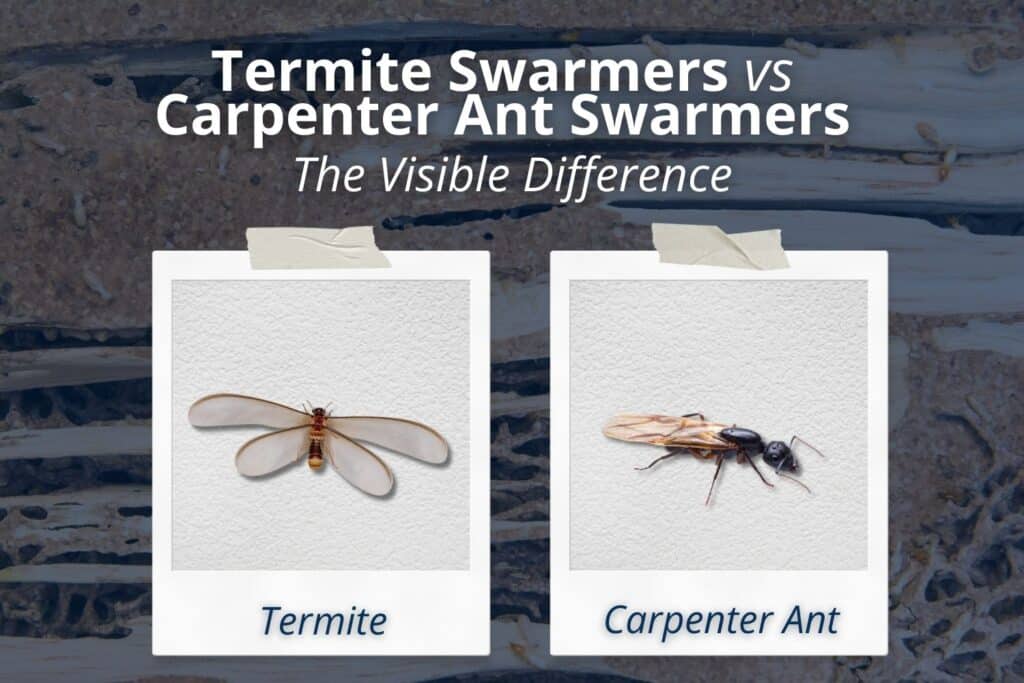
Termite Swarmers vs Carpenter Ant Swarmers
Both pests send out winged swarmers in spring. Texas A&M AgriLife points out that in Texas, it is common for both to swarm at the same time. Here is how to tell them apart:
- Termite swarmers have straight antennae, a thick waist, and two pairs of wings that are the same length.
- Carpenter ant swarmers have bent antennae, a pinched waist, and front wings that are longer than the back wings.
What Else Looks Like Carpenter Ant or Termite Droppings?
Not every pile of specks is a pest problem. These lookalikes fool a lot of homeowners:
- Sawdust from a project. It is even and clean, has no bug parts, and does not come back after you sweep.
- Powderpost beetle frass. It is fine and soft like flour. It pours out of tiny round holes in wood.
- Mouse droppings. They are bigger, about the size of a grain of rice, dark, and pointed on the ends. They are usually scattered along walls. If that sounds like your pile, look into rodent control.
- Cockroach droppings. They look like black pepper and often leave small smears in cabinets and drawers.
- Dirt or sand. It has no set shape and usually tracks in near doors.
What Should You Do If You Find Droppings?
Your first moves make a difference. Here is what to do and what to skip.
- Photograph it first. Snap a close photo with a coin for scale before you clean anything.
- Do not spray store-bought bug spray into the holes. Spraying can scatter carpenter ants and make the nest harder to find. It will not reach termites deep inside the wood.
- Check for water. Look for leaks, wet wood, or clogged gutters near the pile. Moisture draws carpenter ants and speeds up wood damage.
- Do the sweep test. After your photo, sweep the area and check it again in about a week.
- Book an inspection. A trained inspector can confirm what you have and how far it has spread.
It is tempting to try a quick fix from the hardware store. Our post on why homeowners should avoid DIY termite control explains why that usually costs more in the long run.
Does Finding Droppings Mean You Have Structural Damage?
Not always, but it does mean the problem needs attention now. By the time droppings are easy to see, the colony has usually been active for a while.
Carpenter ants dig slowly, and Texas A&M AgriLife notes that Texas species do less damage to structural wood than carpenter ants in other parts of the country. The bigger worry is what they point to. Carpenter ants in your walls often mean there is a leak, rot, or other moisture problem that needs fixing.
Termites are more serious. Drywood termites work slowly, but a colony left alone for years can hollow out trim, framing, and furniture from the inside. Subterranean termites move faster and cause the most damage in Texas. In both cases, damage often stays hidden until it is well along.
The takeaway: if you find droppings of either kind, get a professional termite inspection instead of waiting to see what happens.
Related Questions to Explore
Do carpenter ants eat wood like termites?
No. Carpenter ants chew through wood to build nests, but they cannot digest it. They eat other insects and sweet foods instead. Termites do eat wood, which is why their droppings are solid pellets, and carpenter ant frass is loose shavings.
Does termite frass always mean termites are still active?
Not always. Old pellets can stay inside walls or trickle out long after a colony is gone. Fresh pellets that keep coming back after you sweep are the best sign of an active colony. An inspector can also check for live termites and new damage.
Is carpenter ant or termite frass harmful?
Neither type is known to spread disease. The fine dust can bother your nose and lungs, though, especially if you have asthma or allergies. Wear gloves and a dust mask when you clean it up.
What is the difference between drywood and subterranean termites?
Drywood termites live inside the wood they eat and leave loose pellets behind. Subterranean termites live in the soil and travel through mud tubes. Both live in the Houston area. Learn more in our guide to the kinds of termites most common in Texas.
How do you find a carpenter ant nest?
Follow the ants at night, when they are most active, and look for frass piles near damp wood. Many indoor nests are small satellite nests tied to a larger colony outside. This guide on how to find a carpenter ant nest walks through the steps.
What does a termite inspection involve?
A termite inspection covers the foundation, crawlspace, framing, and outside wood. The inspector looks for live insects, damage, mud tubes, droppings, and swarmers. Grand Slam’s inspections also check for other wood-destroying insects, including carpenter ants.
When to Call a Professional
Call a pro when any of these are true:
- Droppings come back after you sweep them up
- You cannot tell which type of droppings you have
- You see swarmers inside your home
- Wood sounds hollow, feels soft, or has visible tunnels
- You find mud tubes on your foundation or walls
- You are buying or selling a home and need answers fast
Carpenter ants and termites both get harder to treat the longer they go. A trained inspector can tell the difference in minutes and find the source, not just the pile.
Grand Slam Pest Control is locally owned and serves homeowners in The Woodlands, Conroe, Spring, and nearby areas. Here is how we can help:
- Termite Inspection: We check for termites and other wood-destroying insects, including carpenter ants, so you know exactly what you have.
- Termite Control: Targeted treatment to stop an active infestation.
- Termite Prevention: Bait stations and barrier treatments that keep termites from moving in.
- Residential Pest Control: Quarterly plans that cover ants and other household pests, with free return visits between treatments if pests show up.
Every service is guaranteed. If covered pests come back before your next visit, we return at no extra cost.
Conclusion
Here is what to remember:
- Pellets that look like sand or coffee grounds point to drywood termites.
- Stringy shavings with bug parts point to carpenter ants.
- Either one means it is time for an inspection, not a wait-and-see plan.
Texas weather keeps these pests busy most of the year, so a small pile today can turn into a big repair later. If you are not sure what you found, request a free quote from Grand Slam Pest Control and let us take a look.