
This guide explains how mosquito control works for commercial properties, why one-time treatments are rarely effective, and when professional service makes the most sense for long-term control.
Mosquitoes are a constant challenge for all kinds of properties in Southeast Texas. Warm weather, frequent rainfall, and dense landscaping create ideal conditions for mosquito breeding and activity.
For businesses in Texas, mosquito control is not just about comfort. Mosquito activity can limit how outdoor spaces are used and make certain areas of a property difficult to maintain.
Commercial mosquito control works differently from residential treatment because it must address larger spaces, shared areas, and ongoing exposure. Here’s what to know.
Why Mosquito Control Matters for Commercial Properties
Mosquito activity affects how people interact with a commercial space on a daily basis.
Outdoor seating areas, walkways, entry points, loading zones, and shared green spaces are often the first areas impacted. When mosquitoes are present, people avoid these spaces or shorten their time outdoors, which can affect how a property functions overall.
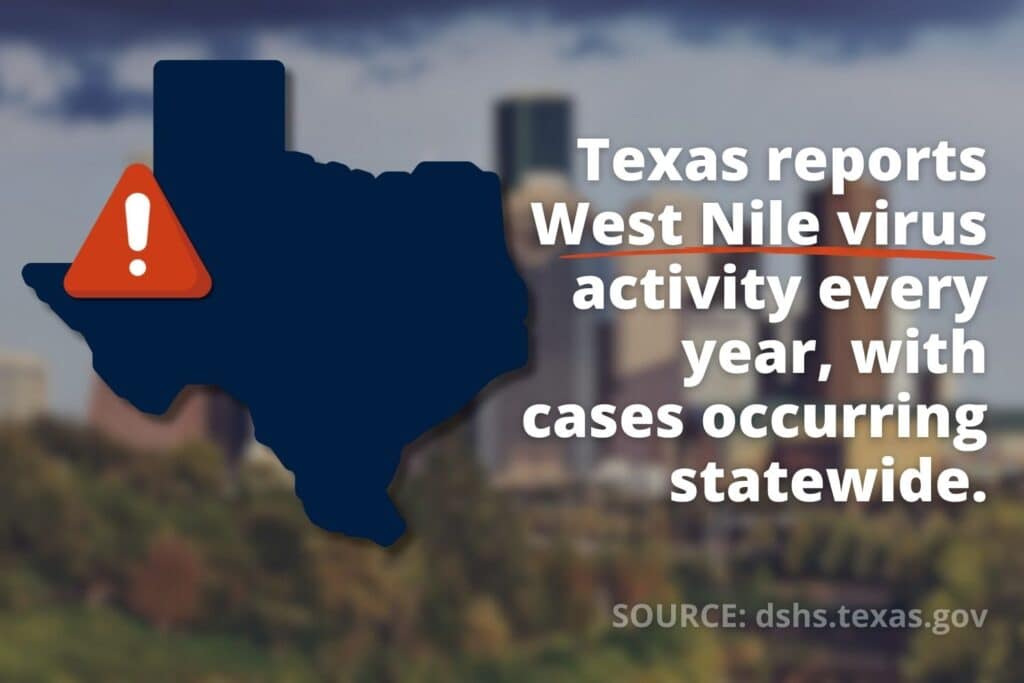
According to the Texas Department of State Health Services, mosquitoes in Texas are known carriers of diseases such as West Nile virus, which appears statewide every year.
While mosquito control is not a medical solution, reducing mosquito populations lowers exposure risk and supports safer environments for employees, customers, and visitors.
For commercial properties, mosquito control is part of keeping outdoor areas functional, accessible, and usable throughout more of the year.
Why Mosquito Pressure Is High in Texas
Southeast Texas provides nearly ideal conditions for mosquitoes to thrive.
Warm temperatures allow mosquitoes to remain active for much of the year rather than only during a short season.
Rainfall is frequent, and even brief storms can leave behind standing water. High humidity helps mosquitoes survive longer and remain active throughout the day.
Commercial properties often include features that unintentionally support mosquito breeding, such as:
- Irrigation systems that run regularly
- Retention ponds or drainage swales
- Mulched landscaping and shaded planting beds
- Flat roofs or roof drains that hold water
- Dumpsters and service areas where water collects
Because commercial sites are larger and more complex than residential yards, mosquito activity can spread across multiple areas if it is not managed consistently.
How Commercial Mosquito Control Differs From Residential
Residential mosquito control usually focuses on a single yard or outdoor living area. Commercial mosquito control must address scale, traffic, and consistency across the entire property.
Commercial properties often have:
- Larger treatment areas, divided into multiple zones
- Outdoor spaces, used throughout the day by many people
- Ongoing expectations for predictable conditions
- Greater responsibility to manage outdoor environments safely
Residential treatments may reduce mosquitoes temporarily, but commercial properties need structured programs that reduce mosquito pressure across all shared spaces and maintain results over time.
How Professional Mosquito Control Works
Professional mosquito control follows a planned process rather than a one-time application.
It begins with a property inspection. Technicians identify breeding areas, resting zones, and conditions that support mosquito activity. This includes standing water, shaded landscaping, drainage patterns, and irrigation practices.
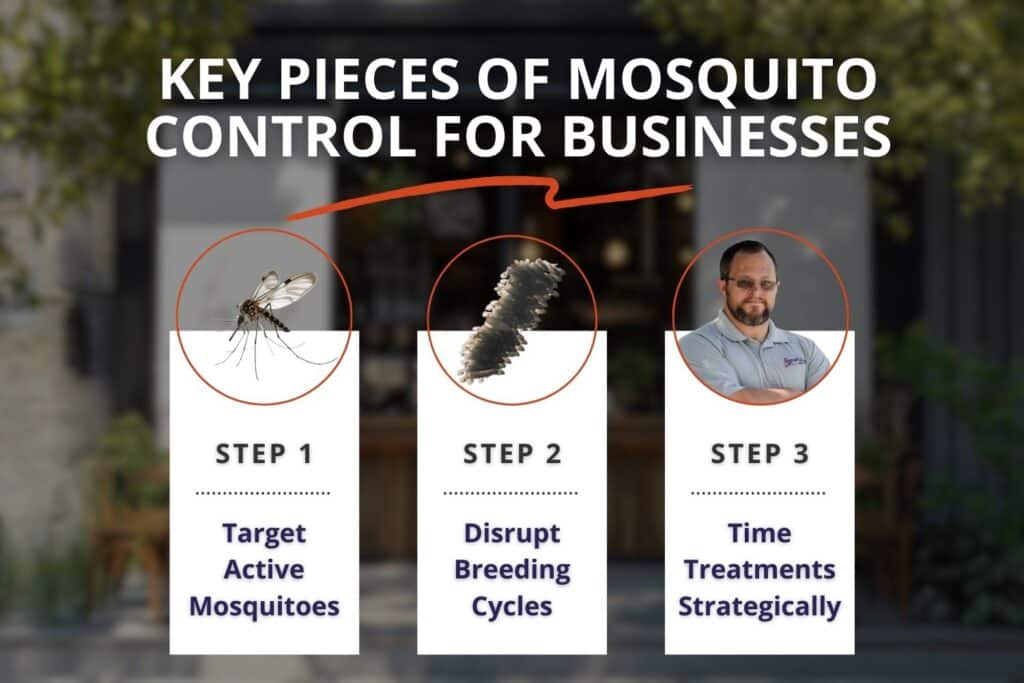
From there, a treatment plan is developed that focuses on two main goals:
- Reducing existing adult mosquito populations
- Disrupting mosquito breeding cycles
Addressing both sides of the problem is what allows commercial properties to see steady improvement instead of short-term relief.
Targeting Adult Mosquitoes
Adult mosquitoes rest in shaded, protected areas during the day.
Common resting zones include dense shrubs, tall grass, hedges, and areas close to buildings that block wind and sunlight. Professional treatments focus on these locations to reduce adult mosquito populations where they are most likely to gather.
Reducing adult mosquitoes provides quicker relief and improves the immediate usability of outdoor areas, especially high-traffic zones.
Addressing Mosquito Breeding Areas
Long-term mosquito control depends on controlling breeding sites.
Mosquitoes lay eggs in standing water, and some species can complete their life cycle in as little as seven to ten days, according to the Centers for Disease Control and Prevention. This means populations can rebound quickly if breeding areas are not addressed.
Professional mosquito control programs focus on:
- Identifying standing water that cannot be removed
- Treating water sources appropriately
- Noting areas where water repeatedly collects
- Recommending changes to drainage or irrigation
By disrupting breeding cycles, mosquito populations are reduced more effectively and remain lower over time.
Why One-Time Treatments Are Not Enough
One-time mosquito treatments rarely provide lasting control for commercial properties.
In Southeast Texas, mosquito populations rebound quickly due to frequent rainfall and warm temperatures. Eggs laid before treatment can hatch days later, and new adults continue to emerge throughout the season.
Without recurring service, properties often experience a pattern of brief improvement followed by renewed mosquito pressure.
Professional programs use scheduled treatments to stay ahead of mosquito life cycles and environmental conditions, which is especially important for properties that rely on predictable outdoor use.
How Treatments Are Timed for Best Results
Timing is a critical part of effective mosquito control.
Professional programs adjust treatment schedules based on weather, rainfall, and seasonal mosquito activity. After heavy rain, breeding increases. During peak mosquito months, more frequent service is often needed to maintain control.
This flexible scheduling allows properties to remain protected during high-risk periods rather than responding only after mosquito activity becomes noticeable.
What Commercial Properties Benefit Most From Mosquito Control
Any commercial property with outdoor areas can benefit from mosquito control, but some see stronger and more consistent value.
These include:
- Restaurants and cafes with outdoor seating
- Office parks and corporate campuses
- Retail centers and shopping plazas
- Hotels and hospitality properties
- Event venues and community spaces
- Schools and childcare facilities
For these properties, mosquito control helps keep outdoor areas usable across more days and seasons.
How Inspection Findings and Conditions Affect Mosquito Control Planning
Different property conditions influence how mosquito control programs are designed.
| Property Condition | Why It Matters | How Professionals Address It |
| Standing water after rain | Breeding risk increases quickly | Targeted water treatments |
| Dense landscaping | Creates resting zones | Focused adult mosquito control |
| Poor drainage areas | Ongoing moisture | Monitoring and site recommendations |
| Large shared outdoor spaces | Higher exposure | Zoned treatment plans |
| Seasonal flooding patterns | Repeated outbreaks | Adjusted service timing |
This approach helps ensure treatments are matched to real conditions rather than applied generically.
What Commercial Mosquito Control Does Not Do
It is important to set realistic expectations.
Commercial mosquito control does not eliminate all mosquitoes. Outdoor environments will always have some mosquito presence, especially in Texas. The goal is to significantly reduce populations and limit breeding so activity remains manageable.
Mosquito control also does not replace basic property maintenance. Standing water, drainage issues, and overgrown landscaping still need attention as part of overall site care.
How Commercial Mosquito Control Fits Into Integrated Pest Management
Integrated pest management focuses on prevention, monitoring, and targeted treatment.
For mosquitoes, this means combining habitat management, recurring treatments, and ongoing evaluation. Conditions are monitored over time, and treatment strategies are adjusted as weather patterns and mosquito pressure change.
This approach works well for commercial properties because it emphasizes consistency and long-term planning rather than reactive spraying.
Other Questions Commercial Property Owners Often Ask
How does standing water around a property affect mosquito activity?
Standing water is the primary breeding source for mosquitoes. Even small amounts can support large populations, which is why drainage and water management are often addressed alongside mosquito control.
Does landscaping design influence mosquito problems?
Yes. Dense, shaded landscaping provides resting areas for mosquitoes and often increases activity levels.
Are mosquitoes active year-round in Texas?
In Southeast Texas, mosquitoes can remain active for much of the year, especially during warm and wet periods.
Can mosquito control be part of a broader pest management plan?
Yes. Many commercial properties manage mosquito control alongside other pest services as part of an integrated approach.
When to Call a Professional
Commercial properties should consider professional mosquito control when mosquito activity becomes predictable, recurring, or difficult to manage internally.
It is often time to involve a professional when:
- Mosquitoes interfere with the normal use of outdoor spaces
- Employees, tenants, or customers report frequent biting
- Standing water or drainage issues are present on the property
- Landscaping creates shaded, damp areas that are hard to manage
- Seasonal mosquito problems return year after year
- One-time treatments or DIY methods fail to provide lasting relief
Professional mosquito control provides structure, consistency, and site-wide coverage that is difficult to achieve without experience, especially on larger properties.
Conclusion
Mosquito control for commercial properties is about reducing populations, limiting breeding, and maintaining usable outdoor spaces. In Texas, where mosquito pressure is high, recurring professional service is often the most effective way to manage the problem.
Grand Slam Pest Control helps commercial property owners in Texas reduce mosquito activity through inspections, targeted treatments, and ongoing service designed for local conditions.
Get in touch today for a quote and better pest management for your business.