
This guide explains how to identify rat poop vs mouse poop, what each one says about the infestation, and why acting early protects your home from damage, odors, and health risks.
Rats and mice are both common in homes across Texas. Because these areas have warm temperatures for most of the year, rodents stay active and reproduce quickly. One of the easiest ways to figure out which pest is in your home is by looking at the droppings they leave behind.
Rat poop and mouse poop look similar at a glance, but the details can tell you a lot about the size of the infestation and where it is spreading.
Why Rodents Are a Problem in This Region
Rodents thrive in warm, humid regions, and around here, they get everything they need: food sources, shelter, and mild winters.
Once rodents get inside, they spread quickly through attics, garages, and wall voids.
Local conditions that increase rodent activity include:
- Mild winters that allow rodents to stay active
- Thick wooded areas that border many neighborhoods
- Easy access points around AC lines, vents, and roof gaps
- High humidity that supports nesting materials
- Suburban growth that pushes wildlife closer to homes
Because rodents move fast and hide well, the droppings they leave behind are often the first sign that they are present.

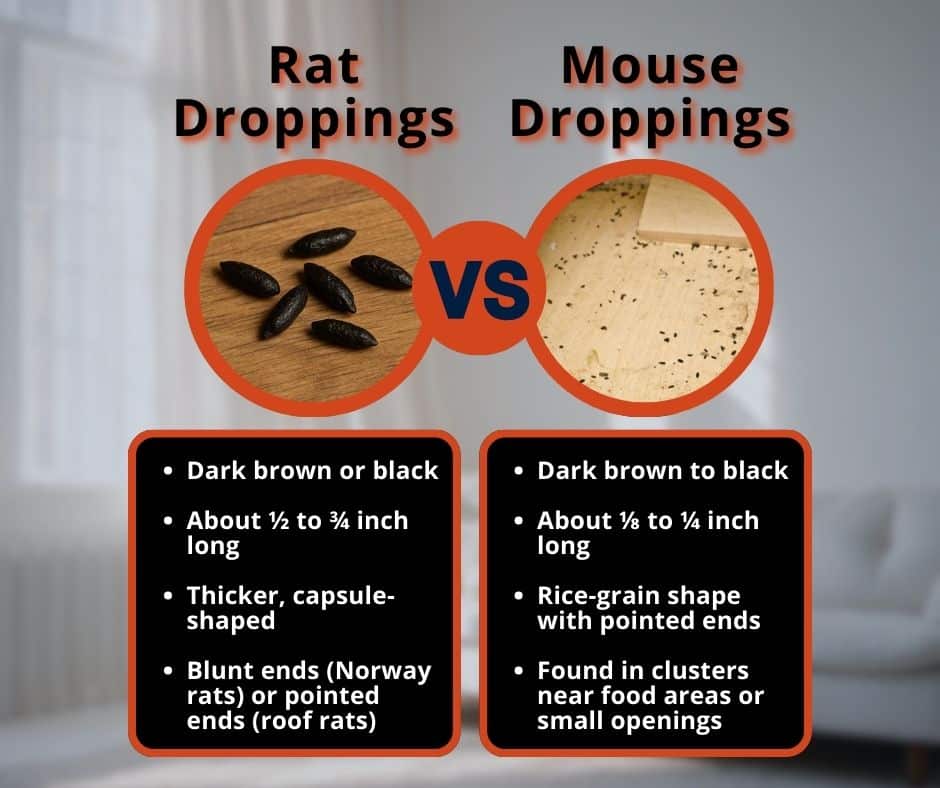
What Mouse Droppings Look Like
Mouse poop is small and easy to miss, especially in attics, pantries, and closets. Droppings often appear in clusters because mice revisit the same areas multiple times a day.
Key features:
- Size about one eighth to one quarter inch
- Rice-grain shape
- Pointed ends
- Dark brown or black when fresh
- Light brown when older
Mouse droppings often appear near food sources, under sinks, along cabinet edges, and inside wall gaps. Because mice eat small amounts but often, you may find many pellets in a single spot.
What Rat Droppings Look Like
Rat poop is much larger and easier to spot. The specific shape can also tell you which type of rat is inside your home, since Norway rats and roof rats leave different types of droppings.
Common features:
- Size about one half to three quarters inch
- Thicker, capsule-shaped appearance
- Rounded or blunt ends for Norway rats
- Pointed ends for roof rats
- Dark brown to black when fresh
Rat droppings are often scattered rather than grouped. In homes across Texas, rat poop is commonly found in attics, near AC units, behind appliances, or along garage walls.
Quick Comparison
| Feature | Mouse Droppings | Rat Droppings |
| Size | Small (about 1/8 to 1/4 inch) | Large (about 1/2 to 3/4 inch) |
| Shape | Rice-like with pointed ends | Capsule-shaped; blunt or pointed depending on species |
| Common Locations | Cabinets, pantry shelves, closets, under sinks | Attics, garages, storage areas, near exterior walls |
| Quantity | Many small pellets | Fewer but larger pellets |
| Rodent Type | Mice | Norway rats or roof rats |
What Fresh vs Old Droppings Tell You
Droppings also change over time, and those changes can tell you whether rodents are still active in your home.
Fresh Droppings
More recent pellets tend to:
- Look shiny or moist
- Feel soft when pressed with a tool (never with your hands)
- Have a stronger odor
Fresh or recent droppings usually mean rodents are very active and nearby. In many homes, fresh droppings in the attic mean rodents are nesting or moving through insulation.
This also means an infestation may be spreading quickly, since rodents can reproduce every few weeks in warm temperatures.
Older Droppings
Older pellets tend to:
- Look dry, dull, or gray
- Crumble when touched
- Show no signs of moisture
Old droppings may mean the rodents have moved to another part of the home or that activity has slowed.
Homeowners often find a mix of fresh and old droppings during a growing infestation, which signals long-term nesting behavior.
Other Signs That Help Confirm Whether It Is Rats or Mice
Droppings are only one clue. The behavior of each rodent also creates different signs.
Signs of Mice
- Small gnaw marks on food boxes
- Tiny holes in fabric or insulation
- Scratching sounds behind walls
- Nesting materials like shredded paper or lint
- Droppings found in tight, hidden spaces
Mice prefer small, low-level openings and often stay close to kitchens or pantries.
Signs of Rats
- Chewed electrical wires
- Larger gnaw marks or holes
- Heavy scratching or movement sounds in the attic
- Larger nests made of insulation, leaves, or debris
- Trails or tunnels through attic insulation
Roof rats are especially common in this region and prefer elevated spaces, which is why attics and rooflines often show more evidence of activity than ground-level rooms.
Why Correct Identification Matters
Correct identification helps determine the right treatment plan. While both pests cause damage, the scale and type of control needed differ.
Mouse Infestations
Mice reproduce fast and often hide in small areas. They tend to spread horizontally through kitchens, closets, and interior walls.
Removing them requires closing tiny openings and setting traps where small movement patterns are found.
Rat Infestations
Rats often cause more serious damage. They chew wiring, ductwork, wood framing, and stored items. They are cautious and avoid new objects, which makes standard traps less effective.
Rats also travel farther, making attic inspections and exclusion services important.
Identifying whether you have rats or mice is the first step for pest control technicians to create a targeted plan that stops current activity and prevents more rodents from returning.
Health Risks Linked to Rodent Droppings
Droppings contain bacteria and allergens that affect indoor air quality. In a warm climate, droppings break down faster, which sends particles into the air more easily.
Health concerns include:
- Breathing issues from airborne particles
- Allergic reactions
- Contaminated food or surfaces
- Higher risks for children, pets, and sensitive individuals
Because sweeping or vacuuming droppings can spread these particles, proper cleaning and removal often require protective equipment or professional help.
Why Droppings Matter for Tracking the Infestation
Droppings help show:
- Where rodents entered
- Where they are currently active
- How long they have been in the home
- Whether the infestation is expanding
- Which areas need sealing or exclusion
Professionals will often map droppings to trace pathways in attics or garages. This helps determine where rodents are nesting, which vents or gaps they are using, and where repairs are required to keep them out.
Related Questions Homeowners Ask
Can droppings help show whether I’m dealing with a rodent or another type of pest?
Yes. The size, shape, and location of droppings can usually tell you rat poop vs mouse poop, or another pest. Rodents leave pellet-style droppings, while insects or wildlife leave waste that looks very different.
Do rodents spread into other parts of the home once they enter the attic?
Often, yes. Rodents use wall voids, wiring routes, and gaps around ductwork to move into new areas. Activity that starts in the attic can expand into garages, closets, kitchens, or storage rooms if entry points stay open.
Can rodent activity attract other pests?
It can. Food crumbs, nesting debris, and moisture create conditions that appeal to insects like ants, roaches, or flies. When rodents are active, it’s common to see other pest activity increase around the same areas.
When to Call a Professional
Contact a professional if you see droppings of any size, hear movement at night, or notice signs like gnaw marks or insulation damage.
Rodent infestations spread quickly in Texas heat, and droppings only show part of the picture. You also need to know how the rodents entered and whether more are hiding in other parts of the home.
A professional visit generally includes:
- Identifying whether the droppings belong to rats or mice
- Checking the attic, garage, and crawlspaces
- Finding entry points around the roof, vents, and foundation
- Creating a plan to remove the infestation safely
- Recommending exclusion steps to prevent rodents from returning
Grand Slam Pest Control specializes in identifying rodent pathways in attics and sealing the openings that allowed them inside. This complete approach helps stop current activity and protects your home long-term.
Conclusion
Identifying rat poop vs mouse poop offers important clues about the type and size of an infestation. Once you understand how rat poop and mouse poop differ, you can take quicker action to protect your home. Droppings also help show where rodents entered and how far they have spread.
If you suspect rodents in your home, a professional inspection is the best way to get clear answers.
Get a quote for Grand Slam Pest Control to provide safe removal, targeted treatments, and detailed exclusion services so your home stays protected year-round.