If you have been spending time in your backyard near The Woodlands, Spring, or Conroe lately, there is a good chance you have noticed some stinging insects making themselves at home. The question most people have is the difference between wasps vs hornets, and whether the answer changes what they should do about it.
It does, a little. But both are aggressive when threatened, both can sting multiple times, and neither one is something you want nesting close to where your family spends time outdoors.
Knowing the difference helps you understand the behavior and risk level you are dealing with. And knowing how to keep both away is what actually solves the problem.
Wasps vs Hornets: Are They Actually Different?
Yes, though the two are closely related. Hornets are technically a type of wasp. They belong to the same family (Vespidae), but hornets are their own distinct genus and differ from common wasps in some important ways.
The confusion is understandable. Both are slender, both build nests, and both defend those nests aggressively. But the species you are most likely to encounter in Southeast Texas, their nesting behavior, and the level of threat they pose are not identical.
How to Identify a Wasp
The most common wasps in the Greater Houston area are paper wasps and yellow jackets.
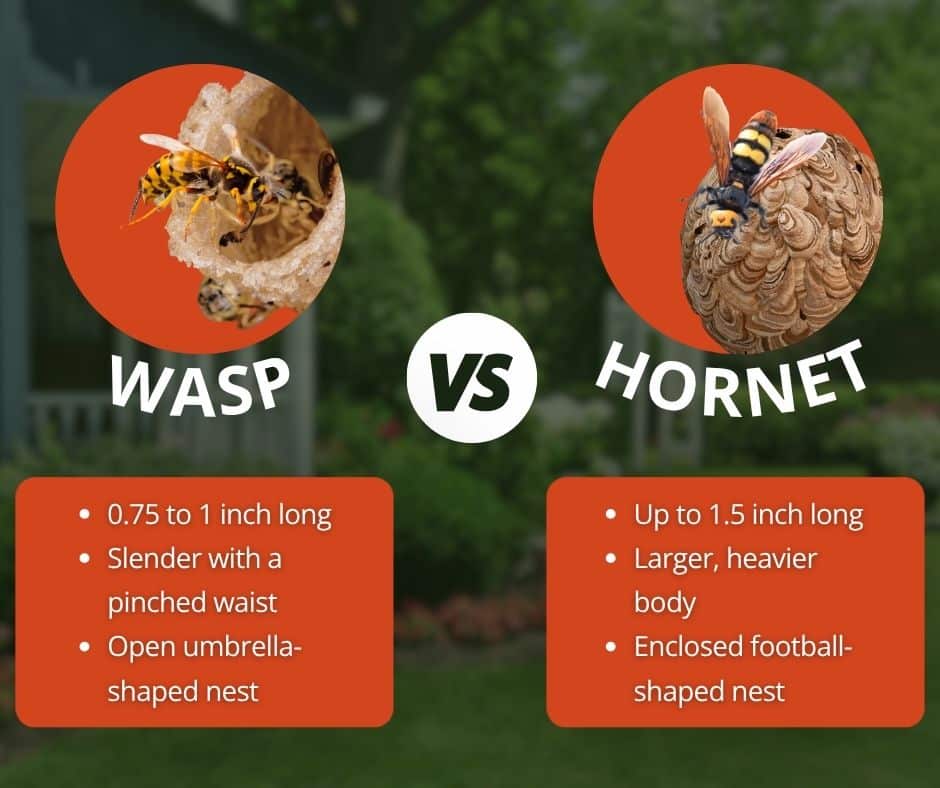
Paper wasps are slender and long-legged with a narrow, pinched waist and brown or reddish coloring with yellow markings. They build open, umbrella-shaped nests from chewed wood pulp that look like exposed gray honeycomb. You will most often find these under eaves, on porch ceilings, inside garage door tracks, and along fence rails. Paper wasps are not especially aggressive unless the nest is disturbed.
Yellow jackets are stockier, with bold black and yellow banding and a more compact body. They are significantly more aggressive than paper wasps and are responsible for most stinging incidents in residential yards. Yellow jackets often nest in the ground, inside wall voids, or in hollow logs, which makes them harder to spot until you are already too close.
Key wasp traits:
- Slender body with a pinched waist
- Smooth, shiny appearance
- Long legs that hang visibly in flight
- Open honeycomb nest or hidden nest in ground or wall voids
- Can sting multiple times
How to Identify a Hornet
The hornet most commonly seen in Texas is the bald-faced hornet. True European hornets are also present in parts of the state.
Bald-faced hornets are black with white or ivory markings on the face and abdomen, typically around three-quarters of an inch long.
Their nests are the most recognizable feature: large, enclosed, football-shaped paper structures suspended from tree branches, shrubs, or building eaves. These nests can grow significantly by late summer. Bald-faced hornets are highly defensive and will pursue a perceived threat at a distance.
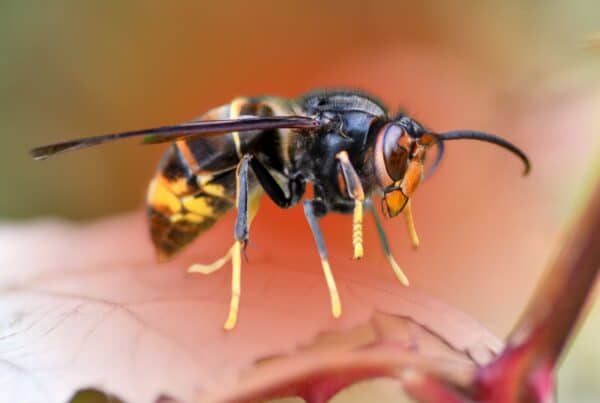
European hornets are larger still, up to an inch and a half long, with a brown and yellow pattern. They are less common in Southeast Texas but are sometimes found nesting in wall voids, hollow trees, and attics.
Key hornet traits:
- Larger body than most wasps
- Black and white or brown and yellow coloring
- An enclosed, papery nest that looks like a gray football
- Highly territorial, will defend from a distance
- Can sting multiple times and signal colony members with alarm pheromones
Wasps vs Hornets: Side-by-Side
| Feature | Paper Wasp | Yellow Jacket | Bald-Faced Hornet |
|---|---|---|---|
| Size | 0.75 to 1 inch | 0.5 to 0.75 inch | 0.75 to 1 inch |
| Color | Brown/red with yellow | Bold black and yellow | Black with white markings |
| Nest type | Open umbrella shape | Underground or wall void | Enclosed football shape |
| Aggression | Moderate | High | Very high |
| Common locations | Eaves, fences, porch ceilings | Ground, walls, logs | Trees, shrubs, eaves |
Which One Is More Dangerous?
Both can be dangerous, especially for anyone with a venom allergy. Yellow jackets and bald-faced hornets are generally higher risk than paper wasps because of their aggression and colony size.
A paper wasp colony typically has a few dozen individuals. A yellow jacket colony can contain thousands of workers by the end of summer and will pursue and sting repeatedly when threatened. Bald-faced hornet colonies are similarly large and known for attacking in numbers.
In Southeast Texas, the warm climate means colonies stay active longer than in most parts of the country. Nests that started small in spring can be substantial and far harder to deal with by August.
How to Keep Wasps and Hornets Away
Prevention is far easier than dealing with an established colony. Here is what actually works:
- Eliminate food and water sources: Yellow jackets are especially attracted to sugary foods, proteins, and standing water. Keep outdoor trash cans sealed, clean up after eating outside, and address areas where water collects in your yard.
- Seal entry points: Wasps and hornets exploit gaps in siding, soffits, fascia boards, and around utility penetrations to build nests inside wall voids. Walk around your home’s exterior in early spring and seal any openings you find.
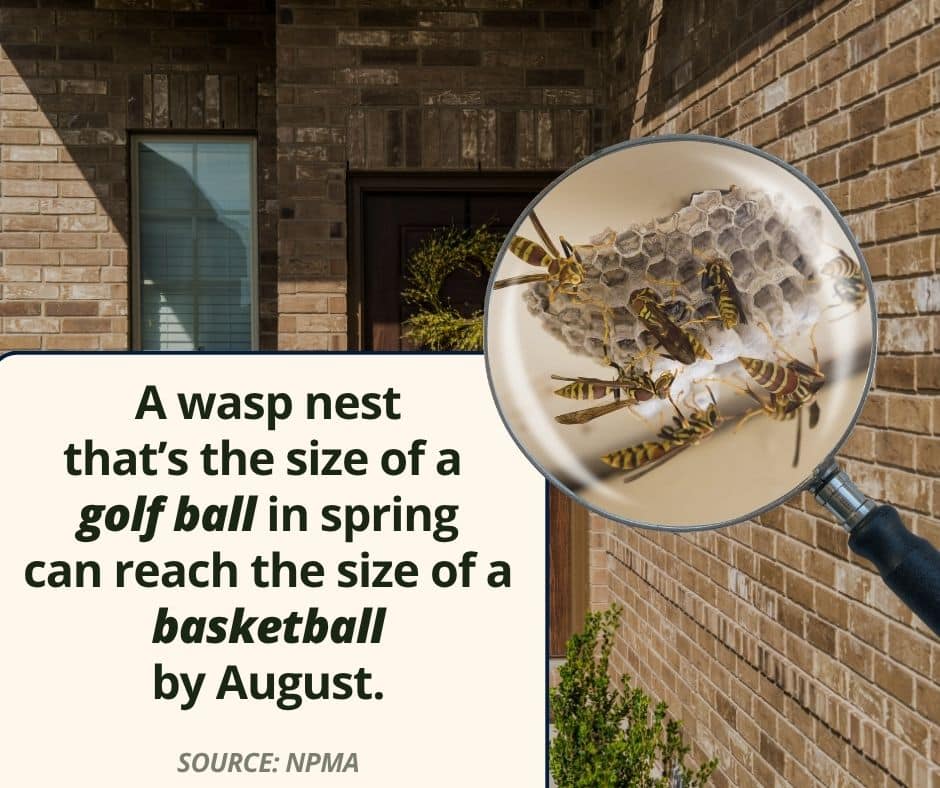
- Check common nesting spots early: Early spring is when queens are just beginning to build. A nest the size of a golf ball is easy to handle. A nest the size of a basketball in August is not. Check under eaves, along fence lines, in shrubs, and inside garage door tracks regularly from March onward.
- Avoid leaving out attractants: Hummingbird feeders, pet food, and uncovered compost bins all draw stinging insects in. Position them away from high-traffic areas and clean them regularly.
- Treat the perimeter: A recurring pest control plan addresses stinging insects as part of broader protection. Grand Slam’s quarterly service includes exterior perimeter treatment and stinging insect coverage within 10 feet of the home, which handles most emerging nests before they become a problem.
What Not to Do
Do not spray a nest with a garden hose or knock it down manually. This almost always triggers an immediate defensive response.
Do not seal a wall void entry point if a colony is already inside. Trapping them pushes the problem further into the structure and makes removal harder.
Do not use DIY store sprays on large or enclosed hornet nests. Consumer products rarely penetrate the structure effectively and will agitate the colony.
Other Related Questions
What other stinging and biting insects are common in Texas yards?
Fire ants are one of the most aggressive stinging pests in the area and a consistent problem for yards across The Woodlands, Conroe, and Spring. Unlike wasps and hornets, they live underground in mounds and can swarm quickly when disturbed. Mosquitoes are another warm-season concern, especially in areas with standing water or heavy tree cover.
How do you know if you have termites vs other wood-damaging pests?
Termites, carpenter ants, and other wood-destroying insects are sometimes confused with one another because the early signs can look similar. The key differences come down to the type of damage, the appearance of any droppings or frass left behind, and where activity is concentrated. A professional inspection is the most reliable way to identify which pest is present before treatment begins.
What does a residential pest control plan typically cover?
A recurring residential plan generally includes exterior perimeter treatments, crawlspace coverage, and protection against a range of common household pests. Specific add-ons like mosquito fogging, rodent control, and termite prevention can be layered in depending on the property and the homeowner’s needs.
How does mosquito control work for a residential yard?
Mosquito treatment targets both adult mosquitoes and breeding areas. Fogging reduces active populations, while identifying and treating standing water sources breaks the breeding cycle. Misting systems offer a more automated ongoing solution for yards with consistent mosquito pressure throughout the season.
When to Call a Professional
Call a professional when:
- A nest is larger than a golf ball or actively populated
- The nest is inside a wall void, attic, or soffit
- You have been stung, or the colony has responded to normal outdoor activity
- You are unsure whether you are dealing with wasps, hornets, or bees
- Nests keep returning to the same location season after season
At Grand Slam Pest Control, we handle stinging insects across The Woodlands, Spring, Conroe, and surrounding communities. Our residential packages include stinging insect coverage near your home, and we offer targeted treatment for active nests when you need it handled quickly.
Conclusion
Wasps and hornets are not the same, but keeping both away from your home follows the same principles: eliminate attractants, seal entry points, check for nests early, and get professional help before a small problem becomes a large one.
In Southeast Texas, where colonies stay active deep into fall, staying ahead of stinging insects is easier than dealing with them once they are established. If you have a nest on your property or want recurring protection, contact Grand Slam Pest Control for a free quote.