
When it comes to DIY termite control, these efforts almost never solve the problem fully. Understanding the local behavior and biology of termites is the first step in ensuring your home remains structurally sound with proactive pest control.
Texas homeowners live in one of the most active termite regions in the United States. Our climate provides the high humidity and warm soil temperatures that wood-destroying insects need to thrive year-round.
Because termites live in large underground colonies or inside the structural wood of a building, they often go unnoticed until significant damage has occurred. Many people inadvertently make these mistakes, leading to thousands in avoidable repairs.
Why the Texas Climate Favors Termite Growth
The environment in Texas is a perfect breeding ground for Subterranean and Formosan termites. These species require constant moisture to survive, which they find easily in the damp soil around residential foundations.
Unlike other pests that may hibernate or slow down during the winter, Texas termites remain active throughout the year.
The “Invisible” Nature of These Infestations:
- Slab Access: Termites only need a gap of 1/32 of an inch in a concrete slab to enter your home.
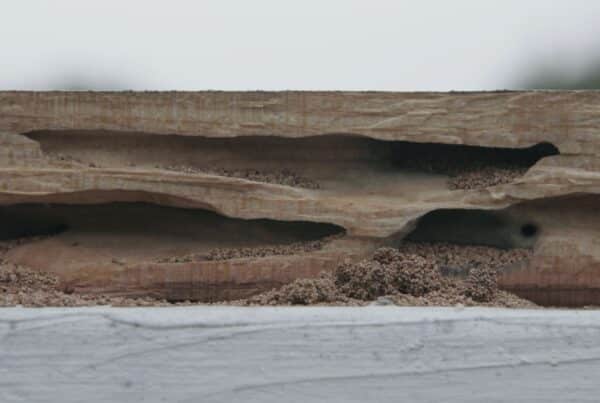
- Internal Diet: They eat wood from the inside out, often leaving the outer paint or stain intact.
- Foundation Bridges: Even if the exterior is brick or stone, the interior framing is vulnerable.
A common mistake is assuming that a brick or stone home is safe. Even if the exterior of your home is not made of wood, the interior framing, floor joists, and drywall are all primary food sources.
Once they enter, they work silently, meaning the lack of visible bugs does not mean your home is clear.

Common Mistakes in DIY Termite Control Efforts
Many people attempt to DIY termite control using over-the-counter products from big box stores. While these products might offer temporary relief for ants, they are largely ineffective against an established termite colony.
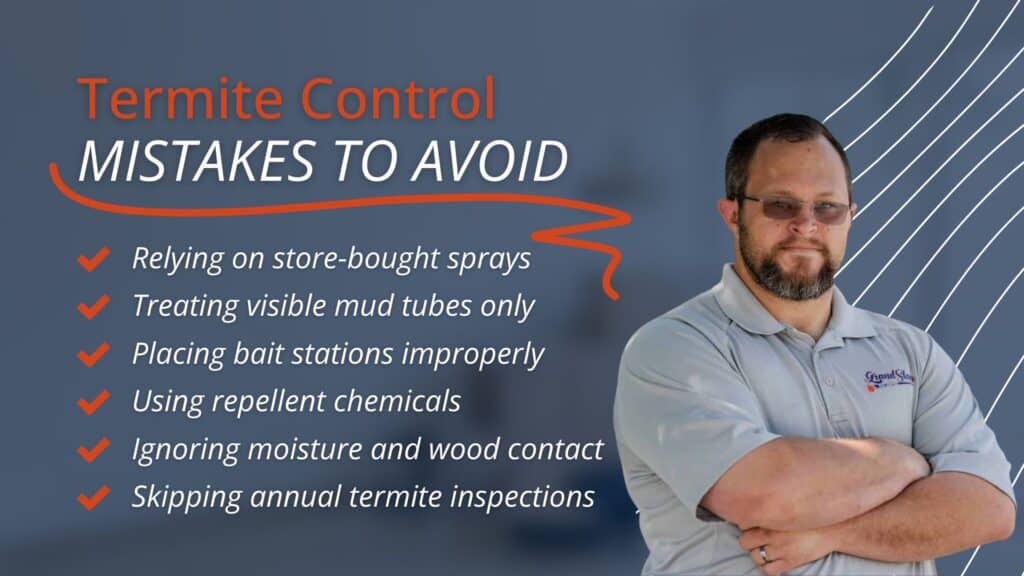
1. Relying Solely on Surface Sprays
Homeowners often spray visible mud tubes or wood surfaces. This only kills the forager termites on the surface. The heart of the colony, including the queen, remains deep underground.
Surface treatments do not penetrate the wood or soil deeply enough to eliminate the source. This creates a false sense of security while the colony continues to feed elsewhere.
2. Improper Bait Station Placement and Maintenance
Baiting systems are a cornerstone of professional termite control, but they require precision. DIY termite control, like over-the-counter bait stations, is often placed in areas convenient for the homeowner rather than areas where termites are actively foraging.
Furthermore, if these stations are not monitored and replenished by a professional, they can run dry. An empty bait station provides zero protection.
3. Using Repellent Chemicals Incorrectly
Professional-grade termiticides are often non-repellent. This is a strategic choice. It allows termites to pass through the treated zone without realizing it, eventually carrying the chemical back to the colony.
If a homeowner accidentally uses a repellent chemical, the termites will simply detect the barrier and find a different, untreated path into the home.
Key Takeaway: Termites are social insects. The most effective way to kill the colony is to use their social behavior against them by introducing slow acting agents they share with one another.
Neglecting Environmental Conducive Conditions
Pest control for termites is about more than just applying chemicals. It involves managing the conditions around the home that attract them.
Many Texas homeowners ignore conducive conditions that invite termites to bridge the gap between the soil and the structure.
Checklist: Correct These Issues Immediately
- Wood to Ground Contact: Ensure firewood is stacked away from the house, and wooden siding does not touch the soil.
- Proper Drainage: Clean your gutters and ensure soil slopes away from the foundation to prevent pooling water.
- Mulch Management: Keep mulch at least six inches away from the foundation, and do not allow it to become overly thick.
- Leak Repair: Fix leaking outdoor spigots or A/C condensate lines that keep the soil moist.
Why Professional Grade Solutions Are Necessary
Professional pest control for termites involves specialized equipment and restricted-use chemicals.
In Texas, we utilize high-volume soil treatments and advanced baiting technologies to create a continuous perimeter of protection.
These methods are designed to withstand the shifting clay soils common in our region.
| A chemical zone is applied to the soil around the foundation. | How It Works | Primary Benefit |
| Liquid Soil Barrier | A chemical zone is applied into the soil around the foundation. | Provides an immediate shield against entry. |
| Sentricon Baiting Systems | Termites feed on bait and share it, eliminating the colony. | Long term monitoring and total colony death. |
| Wood Borate Treatments | Applied directly to raw wood during the construction phase. | Protects the skeleton of the home from the start. |
| Specialized Foams | Injected into wall voids where liquid sprays cannot reach. | Targets active infestations inside finished walls. |
The Critical Need for Annual Termite Inspections
The most expensive mistake a homeowner can make is skipping annual termite inspections and opting for DIY termite control.
Even with a treatment plan in place, the shifting Texas soil can create small gaps in a liquid barrier. Heavy rains or landscaping changes can also disturb treated zones.
A professional inspection from Grand Slam Pest Control identifies the subtle signs a homeowner might miss.
We look for discarded wings on windowsills, tiny kick-out holes in drywall, and hollow-sounding baseboards. Catching the infestation early can save you thousands of dollars in structural repairs.
Understanding the Texas Termite Swarm
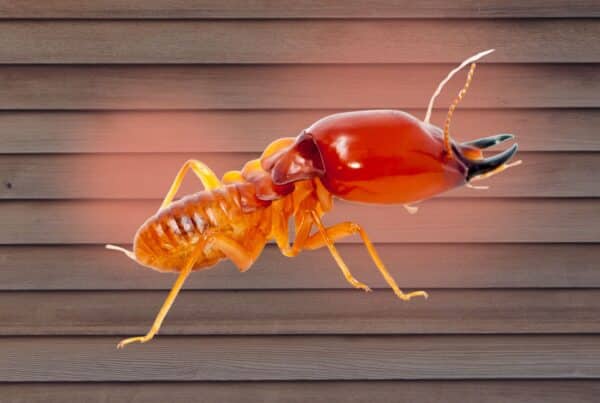
In the spring, usually after a warm rain, mature colonies produce swarmers. These are winged termites searching for a place to start a new colony. Many people mistake these for flying ants.
How to tell the difference:
- Wings: Termites have four wings of equal length. Ants have two pairs of unequal length.
- Waist: Termites have a thick, straight waist. Ants have a pinched, narrow waist.
- Antennae: Termite antennae are straight. Ant antennae are elbowed.
If you see a swarm inside your home, it is a clear sign that a colony is already living within the structure. If the swarm is outside, it means there is a mature colony nearby, and your home is likely a future target.
Collecting a few of these insects for identification by a professional is the best way to determine the level of risk to your property.
Commercial Termite Control in Texas
Termite pressure is not limited to residential homes. Commercial properties, warehouses, and retail spaces in Texas are equally vulnerable. Large buildings often have more complex expansion joints and utility entries that provide easy access for Subterranean termites.
For business owners, an infestation is a major liability. It can lead to structural concerns that impact the safety of employees and customers.
We customize our commercial pest control for termites to ensure your operations are not disrupted while we secure the perimeter of your building. We understand that your business needs to stay open while we work to protect its foundation.
Related Questions to Explore
How does a termite inspection differ from a general pest inspection?
A general pest inspection identifies active insects like fire ants, roaches, or spiders. A termite inspection is a structural evaluation focused on wood-destroying organisms and the environmental factors, like moisture, that attract them.
Can I get a termite warranty for my property?
Most professional treatments come with a service agreement. This usually includes annual inspections and a guarantee to re-treat any new activity at no extra cost. This is the most effective way to protect your property long term value.
What other pests are common in the Texas area?
In addition to termites, we frequently treat for fire ants, mosquitoes, and rodents. Many of these pests are attracted to the same moisture and debris that attract termites. A comprehensive pest management plan covers your entire property year-round.
Is termite treatment safe for my pets and family?
Modern treatments prioritize safety. Liquid barriers are injected deep into the soil, where they are inaccessible to pets and children. Bait stations are secured with tamper-resistant caps. Our technicians always review safety protocols before any application.
When to Call a Professional
If you find mud tubes on your foundation, see winged insects in your house, or notice wood that sounds hollow when tapped, call a professional immediately. These are signs of a mature infestation. Termites work slowly, but they never stop eating.
Attempting to wait or use DIY termite control methods will only allow the damage to spread further into your home support structure.
At Grand Slam Pest Control, we specialize in heavy-duty residential and commercial termite solutions throughout Texas. We provide the aggressive treatment plans and thorough evaluations needed to keep these pests away from your investment.
Conclusion
Protecting a Texas home from termites requires a professional and multi-layered approach. DIY termite control will almost never cut it.
The best way to approach pest control for termites is through a combination of professional barriers and regular, expert inspections. Remember that a termite infestation is a marathon. These pests work slowly but surely to destroy the wood in your home.
If you are concerned about termite activity on your property or want to establish a preventative shield, get in touch with Grand Slam’s team today. We’re ready to secure your property against the silent threat of termites.