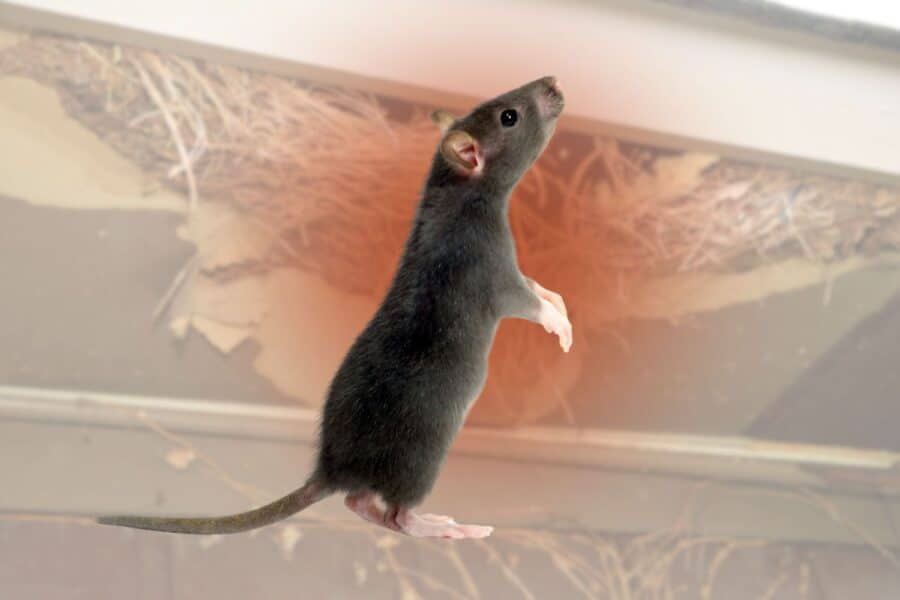

You hear something skittering in the attic late at night. Then, you find a small hole chewed through the back of a cabinet. You notice droppings near the water heater. Whatever the sign, the next question is always the same: what got in, and how did it get there?
The answer matters more than most homeowners in The Woodlands, Spring, and Conroe realize. Different kinds of rodents behave differently, travel differently, and get into your home through completely different entry points.
Knowing which rodent you are dealing with is the first step toward getting rid of it and keeping it out for good. This is what you should know.
Why Texas Homes Are Especially Vulnerable
Texas gives rodents almost everything they need to thrive year-round. The climate is warm, food sources are plentiful, and the combination of wooded neighborhoods, green belts, and suburban development creates ideal conditions for rodents to live close to homes and find their way inside.
Unlike colder climates, where rodents primarily seek shelter in fall and winter, Texas homeowners deal with rodent pressure in every season. Mild winters mean populations don’t thin out the way they do up north, and by spring and summer, foraging activity is in full swing.
Most homes in the area also have features that make entry easier than homeowners expect: crawl spaces, attic vents, garage gaps, aging weatherstripping, and utility penetrations that were never properly sealed. A gap the size of a quarter is enough for a rat. A hole the size of a dime is enough for a mouse.
The Different Kinds of Rodents Found in Texas Homes
Four rodent species show up most commonly in homes across the Houston suburbs and surrounding areas. Each has distinct habits, preferred entry points, and signs of activity.

House Mouse
The most common rodent found inside Texas homes. House mice can squeeze through openings as small as a quarter inch and prefer to nest close to food sources: kitchen cabinets, pantries, wall voids near appliances, and cluttered storage areas.
How they get in:
- Gaps around pipes under sinks and behind appliances
- Cracks in the foundation or gaps where walls meet the floor
- Openings around utility lines entering the home
- Poorly sealed garage doors and door sweeps
Signs of activity:
- Small dark droppings, about the size of a grain of rice
- Gnaw marks on food packaging or wood trim
- Shredded nesting material in drawers or behind appliances
- A musky odor in confined spaces
Roof Rat
Roof rats are the climbers of the rodent world. They are slender, agile, and prefer to travel and nest up high, making attics, upper wall voids, and rooflines their primary territory. In neighborhoods with mature tree coverage, like much of The Woodlands, roof rats use overhanging branches as highways directly onto rooftops.
How they get in:
- Gaps in roof soffits, eaves, and fascia boards
- Openings around attic vents and roof penetrations
- Tree branches that overhang or touch the roofline
- Utility lines running to the exterior of the home
Signs of activity:
- Droppings larger than mouse droppings, with pointed ends
- Scratching or scurrying sounds in the attic or upper walls at night
- Grease marks along beams or rafters from repeated travel paths
- Damaged insulation or gnawed wiring in the attic
Norway Rat
Norway rats are ground-level burrowers that prefer to nest low: in crawl spaces, along foundation walls, under slabs, or in dense vegetation near the home. They are larger and heavier than roof rats and tend to cause more structural damage when they nest inside.
How they get in:
- Gaps and cracks along the foundation at or below grade
- Crawl space vents that are damaged, missing, or poorly screened
- Openings around plumbing that enter through the slab or foundation wall
- Gaps under garage doors or poorly sealed exterior doors
Signs of activity:
- Larger, blunt-ended droppings
- Burrow holes along the foundation, in garden beds, or under debris piles
- Gnaw damage lower on walls, cabinets, and structural wood
- Grease smears along baseboards or foundation walls
Deer Mouse
Less common in suburban settings but worth knowing: the deer mouse is one of the primary carriers of hantavirus in the United States. It tends to enter homes in more rural or wooded areas and prefers quiet, undisturbed spots like garages, storage sheds, and rarely-used rooms.
How they get in:
- Small gaps around doors and windows
- Openings around pipes and utility entries
- Gaps in garage siding or storage structures
Signs of activity:
- Bicolored appearance: brown on top, white underneath
- Nesting in stored items, insulation, or undisturbed boxes
- Droppings similar in size to house mouse droppings
| Rodent | Size | Preferred Entry | Nesting Area |
| House Mouse | Small | Low gaps, pipes, foundation cracks | Walls, cabinets, pantries |
| Roof Rat | Medium | Roofline, vents, tree branches | Attics, upper wall voids |
| Norway Rat | Large | Foundation, crawl space, under slabs | Crawl spaces, burrows |
| Deer Mouse | Small | Door gaps, utility openings | Garages, stored items |

How Rodents Find Entry Points
Rodents don’t wander into homes by accident. They follow scent trails, moisture, warmth, and food odors.
Once one finds an entry point, others in the same area will follow the same path, which is why a single unsealed gap can lead to repeated infestations even after rodents are removed.
Common entry points Texas homeowners miss:
- Garage doors: The gap at the base is one of the most overlooked entry points. Even a properly functioning door leaves enough space for a mouse if the seal is worn.
- Utility penetrations: Every pipe, cable, and conduit that enters from outside is a potential entry point if not sealed with steel wool, caulk, or a metal collar.
- Roofline gaps: Soffits, fascia boards, and joints where the roof deck meets the exterior wall are common spots where materials separate over time.
- Foundation cracks: Small cracks along the base are ground-level entry points for Norway rats and mice, easy to miss during routine yard maintenance.
- Crawl space vents: Damaged or missing vent screens give rodents direct access to the underside of the home.
- Vegetation and debris: Dense shrubs, woodpiles, and debris near the home give rodents cover and a staging area close to entry points. Keep vegetation trimmed and storage off the ground.
Why Identifying the Rodent Type Matters for Control
A roof rat problem and a Norway rat problem require different approaches. Treating for one while ignoring the habits of the other leads to incomplete results.
Trapping placement, bait station height, exclusion materials, and follow-up protocols all vary by species. A pest control professional identifies the species, locates entry points, assesses conducive conditions, and builds a plan that addresses removal, exclusion, and prevention, not just the symptom.
DIY rodent control, including store-bought poisons, typically addresses the symptom without fixing the source. Improperly placed rodenticide also poses risks to pets and children, and rodents dying in wall voids cause odor and secondary pest problems.
When to Call a Professional
Consistent droppings, gnaw marks, noises in the attic or walls, or evidence of nesting are all signs that it is time to bring in a professional. Rodent problems don’t resolve on their own.
Populations grow quickly, and the longer an infestation goes unaddressed, the more entry points get used, and the more damage accumulates. Get a free quote from Grand Slam Pest Control today.
Related Questions
How do you tell rat droppings apart from mouse droppings?
Size and shape are the main indicators. Rat droppings are noticeably larger, while mouse droppings are smaller and more uniform. Roof rat droppings taper to a point; Norway rat droppings are blunt-ended. The difference matters because it helps identify which rodent is present and where to focus treatment.
Where do rats typically nest inside a home?
It depends on the species. Roof rats nest in attics and upper wall voids. Norway rats stay low, near crawl spaces and foundation walls. Both use insulation, shredded paper, and soft debris as nesting material, and nests are often found before the rodent itself is seen.
What other pests are common in Texas homes year-round?
Termites, mosquitoes, and fire ants are all active throughout most of the year in The Woodlands, Spring, and Conroe. Because Texas winters stay mild, pest pressure does not let up between seasons the way it does in colder climates.
What draws pests to a yard in the first place?
Moisture, shelter, and accessible food are the three main drivers. Standing water, dense vegetation, debris piles, and unsecured trash attract a wide range of pests. Addressing these conditions around the exterior of your home reduces pressure from multiple pest types at once.
Conclusion
Different rodents, different entry points, different treatment strategies. That is the reality of rodent control in Texas. The good news is that once you know what you are dealing with, the path forward is clear.
If you have spotted signs of rodent activity in your home or yard, don’t wait for the problem to get bigger. The team at Grand Slam Pest Control is ready to help homeowners across The Woodlands, Spring, and Conroe identify, remove, and keep out whatever has made its way inside. Get your free quote today.