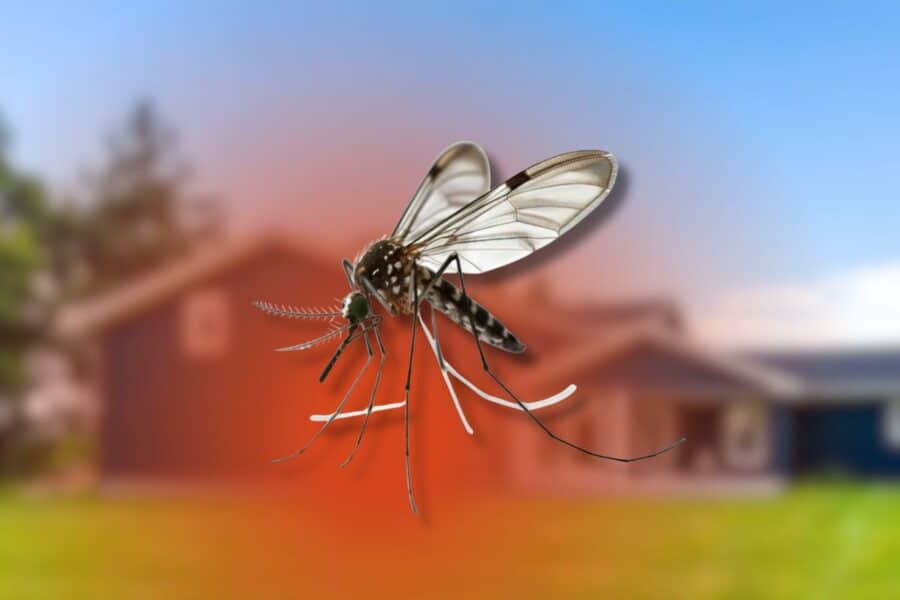
Mosquitoes are attracted to standing water, body heat, carbon dioxide, shaded vegetation, and certain body scents. If your yard seems to draw more mosquitoes than your neighbor’s, one or more of these factors is likely at work. At Grand Slam Pest Control, we help homeowners in The Woodlands, Spring, and Conroe identify and reduce the things that bring these pests close to their homes and families.
This post covers what attracts mosquitoes to your yard, what draws them to specific people, and practical steps you can take to reduce both.
What Attracts Mosquitoes to Your Yard
Mosquitoes need two things to thrive: a place to breed and a place to rest. Your yard can provide both without you realizing it.
Standing Water
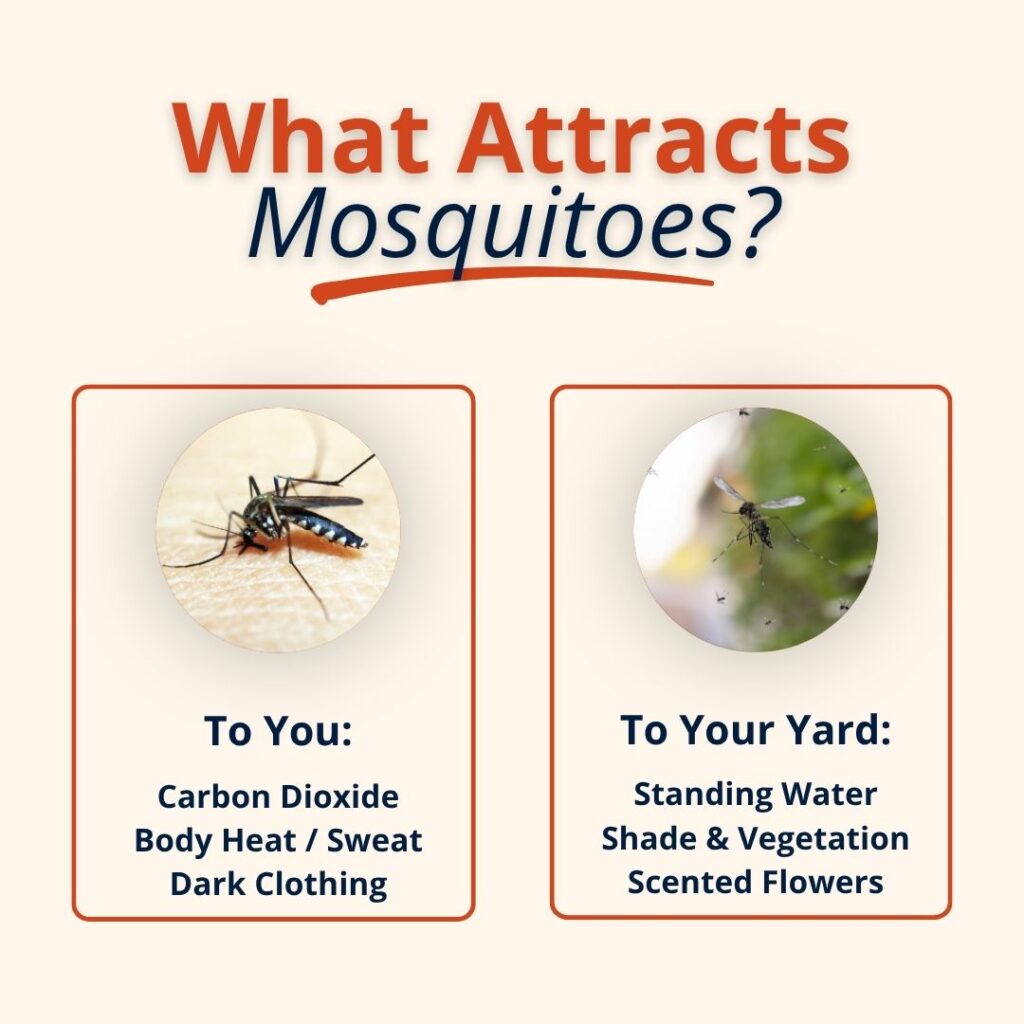
Standing water is the single biggest mosquito magnet on any property. Female mosquitoes lay their eggs in still water, and in as few as five to seven days, larvae can develop into biting adults. A single container holding a few inches of water is enough.
Common sources of standing water around a home include:
- Clogged gutters holding leaf debris and rainwater
- Birdbaths that go several days without being cleaned
- Flowerpot saucers and plant trays
- Low spots in the lawn that collect rain
- Outdoor toys, buckets, and tarps
- Pet water bowls left outside for extended periods
In Southeast Texas, the combination of frequent rain and warm temperatures means water accumulates quickly. Properties in wooded neighborhoods like The Woodlands often have natural dips and shaded areas where water lingers far longer than it would in direct sun.
The most effective thing you can do is dump, drain, or flip any container holding water at least once a week.
Shade and Dense Vegetation
Mosquitoes cannot survive long in direct sunlight. They are cold-blooded insects, and heat dries them out quickly. This is why they shelter in tall grass, dense shrubs, and the undersides of large leaves throughout the day.
Overgrown landscaping gives mosquitoes a cool, humid refuge close to the spots where your family gathers. Trimming shrubs, keeping grass mowed, and thinning out dense plant beds reduces the resting habitat available to them.
Flowers and Sweet Scents
Adult male mosquitoes feed on flower nectar and plant sugars rather than blood. Dense flower gardens can attract male mosquitoes to a yard. While males do not bite, their presence attracts female mosquitoes looking for mates. Properties with heavily planted garden beds may see higher overall mosquito activity as a result.
What Attracts Mosquitoes to You Personally
Once mosquitoes enter your yard, they zero in on specific people using a combination of chemical and visual cues.
Carbon Dioxide
Carbon dioxide (CO₂) is the primary long-range signal mosquitoes use to find hosts. Every exhale releases a plume of CO₂ that mosquitoes can detect from up to 50 feet away, and possibly further. The more CO₂ a person produces, the more noticeable they are to nearby mosquitoes.
Larger adults, people who are exercising, and pregnant women exhale more CO₂ than average, making them more likely to be targeted. This is also why outdoor gatherings seem to bring out more mosquito activity: a crowd of people breathing together creates a much larger CO₂ cloud than a single person sitting quietly. Per the CDC’s guidance on mosquito-borne illness prevention, understanding how mosquitoes find hosts is a key step in personal protection.
Body Heat and Sweat
Mosquitoes use heat sensors to locate warm-blooded hosts at close range. After locking onto CO₂, they seek out the warmth of skin and the chemical compounds in sweat. Lactic acid, uric acid, and ammonia in perspiration all serve as attractants. People who run hot or sweat heavily tend to attract more bites, which is why mosquitoes can seem relentless during outdoor activity in a Texas summer.
Research published through the National Institutes of Health found that people with higher concentrations of carboxylic acid compounds on their skin were consistently more attractive to mosquitoes, and that this trait remained stable over time regardless of environment.
Genetics plays a role here, too. Some research suggests that up to 85 percent of the variation in mosquito attraction between individuals comes down to genetic factors that influence body odor composition.
Dark Clothing
Mosquitoes use vision to locate targets at short range, and dark colors stand out more clearly against natural backgrounds. Black, dark navy, and deep red clothing make a person easier for mosquitoes to spot. Wearing lighter colors when you plan to spend time outside is a simple and often overlooked precaution.
How to Make Your Property Less Attractive to Mosquitoes
Reducing mosquito pressure around your home comes down to eliminating their breeding sites and limiting resting habitat. Here is a practical checklist for properties in the Spring, Conroe, and Woodlands areas:
Eliminate standing water:
- Clean gutters at least twice per year, and after major storms
- Empty birdbaths every two to three days and scrub the basin
- Store outdoor containers upside down when not in use
- Fill in low-lying areas in the yard that collect water after rain
- Treat ornamental ponds or water features with Bti (Bacillus thuringiensis israelensis), a biological larvicide that is harmless to fish, pets, and people
Reduce resting habitat:
- Keep the grass mowed regularly
- Trim back overgrown shrubs and dense hedges
- Remove leaf piles and yard debris promptly
Personal protection during outdoor activity:
- Wear light-colored, loose-fitting clothing
- Apply a repellent registered by the EPA, such as DEET, picaridin, or oil of lemon eucalyptus
- Schedule outdoor activities earlier in the morning rather than at dusk, when mosquito activity peaks
Yard circulation:
- Mosquitoes avoid moving air. Outdoor fans on patios and decks make those spaces less hospitable to them.
For more on how Grand Slam approaches residential mosquito problems in the Woodlands area, schedule our mosquito control service.
Related Questions to Explore
- Are mosquitoes attracted to light? No. Mosquitoes rely on CO₂, heat, and scent to find hosts, not light. Bug zappers are actually counterproductive: they draw mosquitoes onto a property without reliably killing the females that bite. If you want fewer mosquitoes in your yard, targeted treatment works far better than a zapper.
- What smell keeps mosquitoes away? DEET is the most effective option and works by blocking the receptors mosquitoes use to detect body odor. Lemon eucalyptus is a solid alternative, and Citronella candles offer limited help. Repellents reduce bites on you personally, but professional mosquito control reduces the mosquito population in your yard.
- Why do mosquitoes bite some people more than others? Body chemistry is the main driver. People who exhale more CO₂, sweat more, or carry higher levels of lactic acid on their skin attract more bites. Genetics, blood type, and even alcohol consumption can all play a role. If someone in your household always seems to get the worst of it, reducing overall mosquito pressure in the yard protects everyone.
- Do mosquitoes breed in grass? Not directly, but tall grass gives mosquitoes the cool, shaded resting spots they need during the day. Areas along the lawn edge that hold moisture after rain can also support nearby breeding. Keeping the grass mowed and clearing standing water around the perimeter are two of the most practical steps homeowners can take.
- Are mosquitoes worse in The Woodlands, TX? Yes. The combination of warm weather, frequent rain, and wooded surroundings creates near-ideal mosquito conditions from spring well into fall. Texas winters rarely get cold enough to break the breeding cycle, so populations can persist year-round. Recurring mosquito control tends to be more effective than one-time treatments.
- What are mosquitoes attracted to in standing water? Standing water is where female mosquitoes lay their eggs. Warm, still water with organic debris gives larvae the nutrients they need to develop. The cycle from egg to biting adult can happen in as little as five to seven days, which is why a single skipped week of yard checks after a rain event can lead to a noticeable spike in mosquito activity.
When to Call a Professional
DIY mosquito prevention covers a lot of ground, but there are situations where professional treatment is the more effective choice.
If you have removed standing water and trimmed vegetation but mosquitoes remain active throughout your yard, the breeding source may be on a neighboring property, a nearby drainage easement, or in a location you cannot easily address on your own.
If your property has a pond, a creek running nearby, or low-lying sections that stay wet after rain, a professional inspection can identify breeding areas and recommend targeted treatment options.
Grand Slam Pest Control offers both residential mosquito control and commercial mosquito control in The Woodlands, Spring, and Conroe. Our In2Care system targets both adult mosquitoes and their larvae using a biological approach that does not harm bees or other pollinators. Service stations are checked every four to six weeks, and most customers begin seeing results within two to three weeks of the first installation.
If you are spending more time slapping mosquitoes than enjoying your backyard, contact Grand Slam Pest Control for a free quote.
The Bottom Line on Mosquito Attractants
Mosquitoes find their targets using a layered system of cues: CO₂ from your breath, heat and sweat from your body, standing water on your property, and shaded vegetation to rest in between feedings. Reducing any of these signals makes your yard less hospitable and your outdoor time more comfortable.
Key takeaways:
- Dump standing water once a week, including gutters, planters, and containers
- Keep grass mowed and shrubs trimmed to limit resting habitat
- Wear light colors and apply an EPA-registered repellent during outdoor activity
When DIY prevention is not enough, professional treatment can address the full property. Call Grand Slam Pest Control or visit our mosquito control page to schedule service in The Woodlands, Spring, or Conroe.