This guide breaks down exactly what a fire ant will usually look like, how to tell it apart from the others crawling around your yard, and what to do if you find a mound near your home.
If you have lived in the Conroe, Spring, or Woodlands area for even one summer, you already know Texas has no shortage of ants. The tricky part is figuring out which ones are harmless yard neighbors and which ones will send you running inside with a stinging welt on your ankle.
Fire ants fall squarely in that second category, and they look surprisingly similar to a few other common Texas ants at first glance.
What Does a Fire Ant Look Like?
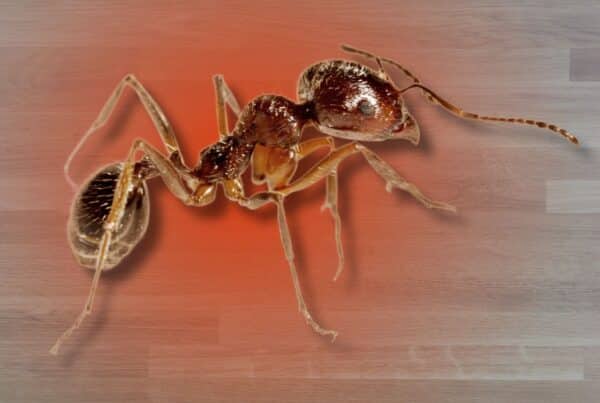
A fire ant is a small, reddish-brown ant with a darker brown or black abdomen. Most workers measure between 1/8 and 1/4 inch long, and unlike many other ant species, fire ants come in several different sizes within the same colony. That size variation is one of the easiest ways to spot them.
Key features to look for:
- Color: Copper-red head and body with a darker rear section
- Size: Mixed sizes within one colony, roughly 1/8 to 1/4 inch
- Body shape: Two bumps (nodes) between the thorax and abdomen
- Antennae: 10 segments with a two-segmented club at the tip
- Stinger: Visible stinger at the end of the abdomen
- Behavior: Extremely aggressive when disturbed, swarming fast
The mound is another giveaway. Fire ant mounds look like loose, fluffy piles of dirt with no visible opening on top. Most sit 4 to 18 inches tall and pop up quickly after heavy rain, which homeowners in Montgomery County know all too well after a wet spring.

Why Fire Ant Identification Matters in Texas
Texas is home to the red imported fire ant, which is not native to the state and has spread aggressively across the southern U.S. since the 1930s. Our warm, humid climate in southeast Texas gives them nearly year-round activity, and a single mature colony can hold 200,000 or more ants.
Fire ants do not just bite; they sting, and they do it in groups.
A single disturbance can trigger dozens of workers to climb onto a foot, hand, or pet and sting at the same time. The stings leave itchy white pustules that last for days and can cause serious allergic reactions in some people.
Knowing what you are dealing with helps you decide how urgent the problem is and whether you can handle it with store-bought products or need professional fire ant control.
Fire Ants vs Other Common Texas Ants
Several other ant species in the Conroe, Spring, and Woodlands area can be mistaken for fire ants, especially from a few feet away. Here is how the most common ones stack up.
| Ant Type | Color | Size | Key Difference |
| Fire Ant | Reddish-brown with dark abdomen | 1/8 to 1/4 in, mixed sizes | Aggressive, painful sting, fluffy mounds |
| Crazy Ant | Dark brown to black | 1/8 in | Erratic, fast movement, no defined trails |
| Carpenter Ant | Black or reddish-black | 1/4 to 1/2 in | Much larger, nests in wood, bites but no sting |
| Acrobat Ant | Light brown to black | 1/8 in | Heart-shaped abdomen held over the body |
Most Texas homeowners can narrow down the ant they are dealing with just by checking color, size variation, and mound shape.
If you see a dusty-looking dirt pile and ants of clearly different sizes boiling out when you tap it, you are almost certainly looking at fire ants.
Fire Ants vs Crazy Ants
Crazy ants have earned their name. Instead of marching in clean lines, they dart around in random, jerky patterns. They are smaller and darker than fire ants, do not build visible mounds, and do not sting.
The biggest clue is movement: fire ants are organized and purposeful, crazy ants look like they have no idea where they are going.
Fire Ants vs Carpenter Ants
Carpenter ants are much larger than fire ants, often reaching half an inch, and are usually solid black or dark reddish-black without the clear two-tone coloring fire ants have. They nest inside wood rather than yard mounds, so you are more likely to spot them near damp wood, window frames, or deck boards.
They can bite, but they do not sting. Their sawdust-like droppings can also be confused with termite droppings, which is its own identification headache for Texas homeowners.
Fire Ants vs Acrobat Ants
Acrobat ants are closer to fire ants in size, but give themselves away with a heart-shaped abdomen that they often lift over their body when disturbed.
Their color ranges from light brown to nearly black, and they tend to nest in wood or under rocks rather than building large mounds in open grass.
Where You Will Find Fire Ants Around Your Texas Home
Fire ants love sunny, open spaces with loose soil, which describes most yards in the Woodlands, Spring, and Conroe pretty well. You are most likely to find mounds:
- In open lawn areas, especially near sprinkler heads
- Along driveways, sidewalks, and patios
- Next to fence lines and tree bases
- Around outdoor electrical boxes and HVAC units
- In flower beds and mulched areas
- Near standing water or recently flooded ground
After heavy rain, fire ants often rebuild mounds overnight or move them entirely. If you mowed a clean lawn on Saturday and woke up to four fresh mounds on Monday, that is classic fire ant behavior in southeast Texas.
Electrical equipment is a surprising favorite. Fire ants are drawn to electrical fields and have been known to damage AC units, pool pumps, and traffic signal boxes across Montgomery County.
If you notice ants swarming around an outdoor outlet, do not spray water on it. Call a licensed pest control company instead.
What a Fire Ant Sting Looks and Feels Like
One of the fastest ways to confirm you are dealing with fire ants is, unfortunately, getting stung. Fire ant stings follow a recognizable pattern:
- A sharp, burning sensation right after contact
- A red welt forms within minutes
- A white or yellow pustule appears within 24 hours
- Intense itching that can last several days
Stings often show up in clusters because fire ants grab the skin with their jaws and pivot to sting multiple times in a ring pattern.
Some people have serious allergic reactions, including trouble breathing, swelling of the face or throat, dizziness, or a rapid heartbeat. If any of those symptoms show up, get medical help right away.
What to Do When You Find a Fire Ant Mound
The instinct to grab a shovel and smash a fire ant mound is strong, but it almost never works. Disturbing a mound without treatment just scatters the colony, which often rebuilds a few feet away and comes back angrier.
A safer, more effective approach:
- Do not kick, stomp, or flood the mound without treating it first
- Keep kids and pets away from the area until the mound is treated
- Apply a fire ant bait around the perimeter of the yard to reach multiple colonies
- Follow up with a mound drench for active mounds you want gone quickly
- Repeat treatments as new mounds appear, especially after heavy rain
Store-bought products can knock down small infestations, but fire ants are stubborn. A single yard often has several satellite colonies connected underground, so treating one visible mound rarely solves the problem for long.

Related Questions to Explore
How do you actually get rid of fire ants for good in a Texas yard? Long-term control takes a two-step approach: a yard-wide bait to reach hidden colonies, followed by direct treatment of any active mounds. Ongoing quarterly service keeps new colonies from taking over between treatments.
Can fire ants make their way inside the house? Yes. Fire ants will move indoors during extreme heat, heavy rain, or drought, especially near kitchens, laundry rooms, and pet food areas. Indoor activity usually points to a bigger outdoor colony nearby.
What other stinging pests are common in southeast Texas yards? Wasps, hornets, and paper wasps are the most common. Nests near doors, eaves, and play areas should be handled carefully because disturbing them can trigger the same kind of swarming response you see with fire ants.
Do the same Texas yards that attract fire ants also attract other pests? Often, yes. Warm soil, moisture, and overgrown vegetation that invite fire ants are the same conditions that attract mosquitoes, rodents, and termites.
How do you tell ant droppings apart from termite droppings? Carpenter ant droppings look like coarse sawdust mixed with tiny body parts, while termite droppings are uniform, oval pellets that pile up in small mounds. Each pest calls for a different treatment plan.
Do commercial properties in the Woodlands deal with fire ants, too? Absolutely. Office parks, retail centers, schools, and restaurants all see fire ant pressure, especially in landscaped areas and near entryways. Commercial properties usually need a more frequent treatment schedule to keep up with foot traffic and liability concerns.
When to Call a Professional
Some fire ant situations are just too big, too close, or too risky to tackle on your own. Reach out to a licensed pest control company if you notice:
- Multiple active mounds across the yard
- Mounds within 10 feet of the home, patio, or playset
- Fire ants near AC units, pool pumps, or electrical boxes
- Repeated infestations after DIY treatment
- Anyone in the household with a known insect sting allergy
- Pets or children who use the yard frequently
A professional treatment gets at the full colony, including the queen, and sets up a barrier that keeps new colonies from moving in. Grand Slam Pest Control offers fire ant control as a standalone service and as part of our quarterly residential plans, so Conroe, Spring, and Woodlands homeowners can stop playing whack-a-mole with mounds.
Conclusion
Fire ants are one of the easier Texas ants to identify once you know what to look for. The reddish-brown color, mixed sizes within a single colony, and fluffy mounds in open grass are clear giveaways, and the aggressive behavior removes any doubt pretty quickly.
Telling them apart from crazy ants, carpenter ants, and other common local species helps you respond faster and avoid wasted time on the wrong treatment.
If fire ants have taken over your yard, the team at Grand Slam Pest Control is ready to help. Give us a call or request a free quote, and we will put together a plan that fits your yard, your family, and your schedule.