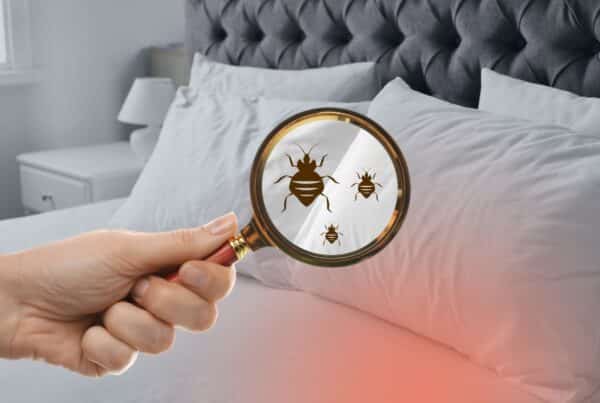
Bleach kills bed bugs, but only the ones it actually touches. Spray a bed bug directly, and it dies in seconds. Spray your mattress and the eggs tucked into the seams survive without a scratch. That is the trap most homeowners fall into after they have already reached for the spray bottle.
At Grand Slam Pest Control, we get calls from The Woodlands, Spring, and Conroe homeowners who tried bleach first and are still finding bites. Bed bugs do not slow down much in our warm, humid Texas climate, so a partial fix rarely holds for long. Bleach is not useless against bed bugs.
It is also not a fix. Here is what bleach actually does, where it falls short, and what clears an infestation for good. For the full picture on how these pests operate, see our bed bug profile.
How Bleach Kills Bed Bugs
Bleach kills bed bugs on direct contact. The active ingredient, sodium hypochlorite, breaks down the proteins in a bed bug’s exoskeleton. Once that outer shell is compromised, the bug dehydrates and dies, often within a minute of concentrated exposure.
Diluted bleach works too, just slower, sometimes taking a day or more to finish the job.
The catch is in that phrase “direct contact.” Bleach has no effect on a bed bug it never touches, and it has zero residual killing power once it dries. It is a contact killer, not a barrier or a trap, which matters a lot once you understand where bed bugs actually spend most of their time. The EPA classifies bed bugs as a public health pest precisely because they are so hard to eliminate with household products alone.

Why Bleach Can’t Clear an Infestation
Bed Bugs Hide Where Bleach Can’t Reach
Bed bugs squeeze into mattress seams, box spring frames, headboard joints, baseboards, and electrical outlets. Most of a bed bug population at any given time is tucked into one of these spots, not out in the open where a spray bottle can reach it. You can soak a mattress top in bleach and still leave the majority of the infestation completely untouched. If you are not sure whether you are even dealing with bed bugs yet, our guide to early signs of bed bugs covers what to look for before you reach for any treatment.
Bleach Has No Residual Effect
Once bleach dries, it stops working. A bed bug that walks across a bleached surface an hour later crawls right through unharmed. Professional treatments rely on materials or heat that keep working long after the initial application. Bleach gives you one shot, and only for the bugs it hits in that exact moment.
Bleach Can Damage Your Home
Bleach is corrosive. It discolors and weakens fabric, strips the finish off wood, and can damage flooring and upholstery. Spraying enough of it to meaningfully treat a room also means breathing concentrated fumes in an enclosed space, which is a real respiratory risk, especially for kids, pets, and anyone with asthma. A residential pest control visit skips all of that risk and treats the actual source instead of guessing with household chemicals.
There is one more wrinkle: bed bugs can detect and avoid the smell of bleach. Spraying an area they are established in often just pushes them into a neighboring room or a different piece of furniture, which can turn a one-room problem into a whole-house one.
Common Bleach Mistakes Homeowners Make
Most of the trouble comes from a handful of predictable mistakes:
- Treating only visible bugs. Spraying the few bugs you can see and assuming the problem is solved, while dozens more stay hidden in cracks and frames.
- Diluting too much. A weak bleach-and-water mix can take days to kill anything, giving bugs plenty of time to move.
- Mixing bleach with other cleaners. Combining bleach with ammonia-based products (common in some glass and floor cleaners) creates toxic fumes. Never mix cleaning products when treating for pests.
- Soaking non-washable furniture. Upholstered chairs, wood furniture, and carpet can be permanently damaged by bleach, often for no real pest control benefit.
- Skipping the follow-up. Even a successful spot treatment does nothing about eggs that hatch a few days later.

Does Bleach Kill Bed Bug Eggs?
Yes, but again, only on direct contact. Bleach oxidizes the shell of a bed bug egg and dries out the nymph inside, so a soaked egg will not hatch.
The problem is that bed bug eggs are roughly the size of a pinhead and are usually glued into cracks, carpet edges, and seams you cannot see, let alone soak thoroughly.
Missing even a handful of eggs is enough for an infestation to bounce back within a couple of weeks, right around the time the survivors reach adulthood.
What Actually Gets Rid of Bed Bugs
Since bleach only works where it lands, the fix for an actual infestation has to reach bed bugs wherever they are hiding, not just where you can see them.
- Heat treatment. Bed bugs die at 118°F, and their eggs need about 90 minutes at that temperature to be fully wiped out. Professional heat treatments raise an entire room to that temperature at once, which reaches bugs hiding in walls and furniture that no spray ever will.
- High-heat laundering. Wash bedding, clothing, and linens in hot water, then run them through a dryer on the highest heat setting for at least 30 minutes. This is one of the few DIY steps that genuinely helps, especially right after you first spot a problem.
- Thorough vacuuming. Regular vacuuming of mattress seams, furniture joints, and baseboards physically removes bugs and eggs. Empty the canister into a sealed bag outside right after, or they can crawl back out and start over.
- Mattress and box spring encasements. A quality, bed-bug-rated encasement traps any bugs left inside and stops new ones from getting in while you treat the rest of the room.
- Professional inspection and treatment. A trained technician knows where bed bugs actually hide in a Texas home and can treat those spots directly, instead of guessing with a spray bottle.
Bleach vs. Real Bed Bug Treatments
Here is how bleach stacks up against the methods that actually clear an infestation:
| Method | Reaches hidden bugs/eggs? | Lasting protection? | Risk to home/health |
|---|---|---|---|
| Bleach spray | No | No | Fabric damage, fumes, corrosion |
| High-heat laundering | Only washable items | No | Low |
| Vacuuming | Partial | No | Low |
| Mattress encasement | Traps existing bugs | Yes, while in use | Low |
| Professional heat treatment | Yes | Yes, when combined with prevention | Low, when done by a trained technician |
The pattern is consistent: bleach ranks at or near the bottom on every measure that actually matters for getting rid of bed bugs, and it is one of the only options on the list that can damage your home in the process.
Related Questions to Explore
Does bleach kill bed bugs instantly?
Concentrated bleach can kill a bed bug in as little as 10 to 60 seconds of direct contact. Diluted bleach solutions take much longer, sometimes 24 to 48 hours, and are far less reliable.
Can I spray bleach directly on my mattress?
You technically can, but it is not recommended. Bleach discolors and weakens mattress fabric, and it will not reach bugs or eggs hidden deep in the seams and internal layers. If you are already seeing early signs of bed bugs on your mattress, a professional inspection is a safer next step than soaking it in bleach.
Will bleach get rid of a bed bug infestation completely?
No. Bleach can kill individual bugs and eggs it directly contacts, but it cannot reach an entire infestation hiding across a room. Most homeowners who rely on bleach alone see the population return within weeks.
What kills bed bugs permanently?
Heat treatment above 118°F, applied by a professional to an entire room, is currently the most reliable way to eliminate bed bugs and their eggs in one pass. Combining it with ongoing inspection and prevention habits keeps them from coming back.
Is it safe to use bleach around pets and kids for bed bugs?
Not really. Bleach fumes are harsh on the lungs in an enclosed bedroom, and the amount needed to meaningfully treat bed bugs is well beyond normal cleaning use. Keep pets and kids out of any room you have treated with bleach until it is fully dry and ventilated, and consider safer alternatives for bed bug control specifically.
When to Call a Professional
If you have tried washing bedding on high heat and vacuuming and you are still finding bites or bugs after a week or two, it is time to bring in a professional. That is especially true once bugs have spread beyond a single bed or room. The EPA classifies bed bugs as a public health pest precisely because they are so difficult for homeowners to clear on their own with over-the-counter products.
Grand Slam Pest Control’s residential pest control team serves The Woodlands, Spring, and Conroe, and every service we provide is backed by our guarantee. If you experience a problem with a covered pest before your next scheduled visit, we come back at no extra cost. Entomologists with the University of Florida Extension also advise against relying on bleach for bed bug control, recommending an integrated approach instead, which is exactly what a professional inspection gives you.
Conclusion
Bleach will kill a bed bug or egg it touches directly, but it cannot reach the eggs and bugs hiding in seams, frames, and baseboards, and it does nothing once it dries.
A few things worth remembering:
- Bleach only works on direct contact and leaves no lasting protection.
- Heat treatment, high-heat laundering, and thorough vacuuming do far more against a real infestation.
- A professional inspection finds hiding spots a spray bottle never will.
If you are finding bites, stains, or early signs of bed bugs in your home, get a free quote from Grand Slam Pest Control and let us handle it properly the first time. You can also read more in our full bed bug profile for prevention tips and what to watch for.