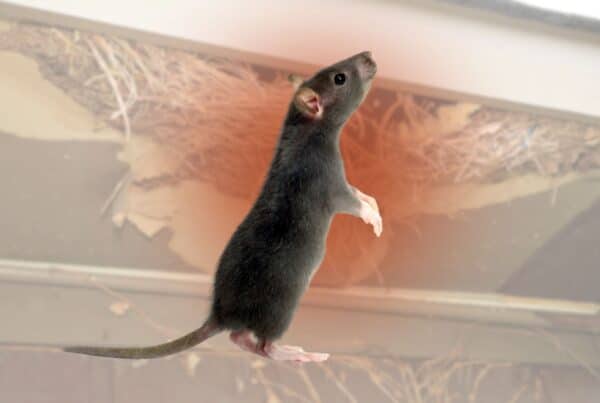
To seal entry points for mice, find every gap about 1/4 inch or wider, then close it with a material mice can’t chew through. Pack small holes tight with copper mesh and cover them with sealant. Use hardware cloth, sheet metal, or cement for bigger openings. Caulk or spray foam on its own won’t hold.
At Grand Slam Pest Control, we find the same weak spots over and over in homes across our service areas in The Woodlands, Spring, and Conroe: garage doors, pipe gaps, and crawl space vents. This guide covers where to look, what to use on each type of gap, and the mistakes that let mice right back in.
Does Sealing Entry Points Stop Mice for Good?
Yes. Sealing entry points is the only step that keeps new mice from getting in. Traps and bait remove the mice already inside, but they do nothing about the next ones following the same path. Mice leave scent trails, so one open gap can bring in mouse after mouse, even after you’ve cleared out the first group.
The CDC’s rodent guidance puts it simply: seal up holes inside and outside your home, or rodents will keep getting inside.
This matters even more in our part of Texas. Mild winters mean mice stay active all year. Wooded lots, green belts, and new construction push them toward homes, and the Gulf Coast humidity breaks down weak sealing materials faster than in drier climates.

How Small of a Gap Can a Mouse Fit Through?
A house mouse can squeeze through a gap about 1/4 inch wide, roughly the width of a pencil. Their skulls are small and their bodies are soft, so if the head fits, the rest follows.
Use this simple test during your inspection: if a pencil fits in the gap, seal it. Rats need a bit more room, about 1/2 inch, but they use many of the same routes. If you aren’t sure what you’re dealing with, our guide on how different kinds of rodents enter your home breaks down the habits of each species.
Where Mice Get Into Homes in The Woodlands, Spring, and Conroe
Most mouse entry points start outside the home. They are often easier to spot from inside, though, where pipes, wires, and vents pass through the walls. Check both sides.
Outside the Home
| Entry Point | What to Look For |
|---|---|
| Garage doors | The bottom corners of the garage door are the number one spot we see. Worn rubber seals leave a gap at each side that is just big enough for a mouse. |
| Utility lines | Look where the AC line set, hose bibs, dryer vent, gas line, and cable or internet lines enter the house. These same gaps let in roaches, spiders, and other bugs, which our general pest control service treats. |
| The slab line | Check where siding or brick meets the foundation, plus any cracks in the slab itself. Slab cracks are also a common way in for subterranean termites, so a termite inspection is worth scheduling if you find them. |
| Brick weep holes | These small openings near the bottom of brick walls let moisture drain out. Mice use them too, and so do termites looking for a hidden path into the wall. Ask us about termite prevention for these spots. |
| Crawl space vents | Older pier-and-beam homes in Conroe and parts of Spring often have vents with rusted or missing screens. |
| The roofline | Mice climb brick and stucco with ease. Check soffit gaps, roof returns, attic vents, and spots where two rooflines meet. In The Woodlands, tall trees with branches over the roof make this route even easier. |
| Doors and windows | If you can see daylight around a closed door, a mouse can get through. |
Inside the Home
| Entry Point | What to Look For |
|---|---|
| Kitchen and bathroom sinks | Gaps where pipes come through the wall under the sink |
| Kitchen appliances | Openings behind the stove, refrigerator, and dishwasher. If you find droppings or other signs back there, our pest library can help you figure out what you’re dealing with. |
| Utility areas | Gaps around the water heater and furnace or air handler |
| Closets and baseboards | Floor corners inside closets and spots where baseboards meet the floor |
| Vents | Gaps around the dryer vent and floor vents |
| The attic | The attic hatch and any gaps in the attic floor. Wasps and other stinging insects use the same attic gaps, so seal them for more than just mice. |
How to Find Mouse Entry Points
The fastest way to find mouse entry points is a slow walk around the outside of your home with a flashlight, followed by a check of every spot where pipes or wires enter inside. Here is the order we recommend:
- Walk the outside in daylight. Start at the garage and work around the house. Look low along the slab, then scan up to the roofline.
- Look for signs of use. Active entry points often have dark rub marks from oily fur, gnaw marks, or small droppings nearby. Not sure if the droppings are from a mouse? Our rat poop vs. mouse poop guide shows you how to tell, and Texas A&M AgriLife Extension’s guide to managing rats and mice explains how to read droppings, runways, and noises.
- Do the light test. Close the garage door, turn off the lights, and look for daylight at the corners and along the bottom seal.
- Check inside. Pull out the fridge and stove if you can. Open every sink cabinet. Look behind the water heater.
- Try the flour test. Sprinkle a thin layer of flour or baby powder near a suspected gap. Tiny tracks the next morning tell you it’s in use.
Keep in mind that a gap with no signs of activity can still become an entry point later. Seal it anyway.
Best Materials to Seal Entry Points
The best material depends on the size and location of the gap. Metal mesh with sealant works for most small holes, while hardware cloth, cement, or sheet metal handles the larger ones.
| Gap or opening | Best material | Why it works |
|---|---|---|
| Hairline cracks in trim or siding | Exterior polyurethane or silicone sealant | Closes cracks before mice can widen them |
| 1/4 inch to 1 inch holes | Copper mesh packed tight, then sealant over it | Mice can’t chew through metal, and the sealant holds it in place |
| Pipes going through walls | Metal pipe collar or escutcheon plate, plus sealant | Covers the ragged gap around the pipe |
| Vents and openings over 1 inch | 1/4 inch galvanized hardware cloth, screwed in place | Keeps airflow while blocking rodents |
| Foundation and slab cracks | Mortar patch or hydraulic cement | Permanent fix that won’t break down |
| Gaps under doors | Door sweep or new threshold | Closes the gap you can see daylight through |
| Garage door bottom | New bottom seal plus a rodent guard strip | Blocks the corners where the seal wears out |
| Brick weep holes | Weep hole covers (vented mesh inserts) | Keeps mice out without trapping moisture |
Why Copper Mesh Beats Steel Wool in Texas
Steel wool works in a pinch, and it’s still in the CDC’s basic advice. The problem is our humidity. Steel wool rusts fast outdoors in the Houston area, falls apart, and can leave rust stains on brick and siding. Copper mesh or stainless steel mesh costs a little more but holds up for years.
What Not to Use
- Spray foam by itself: Mice chew through standard expanding foam with no trouble. If you use foam to fill a big void, pack metal mesh in first.
- Caulk by itself on larger holes: Mice can grab the edge and gnaw through it.
- Wood, plastic, rubber, or duct tape: All of these are chewable.
- Solid fills in weep holes or vents: Blocking these traps moisture in your walls or crawl space, which can lead to mold and wood rot.

How to Seal Mouse Entry Points
Seal entry points in this order: clear out the mice, clean the gap, pack it with metal, cover it with sealant, and check your work in a few weeks.
- Get the mice out first. Set traps along walls and near signs of activity. Texas A&M AgriLife experts recommend traps over poison baits for mice already inside. If you seal mice inside, they may die in your walls or chew a new way out.
- Clean the opening. Brush away dirt, old caulk, and loose debris so the new material sticks.
- Pack the gap with copper mesh. Stuff it in tight with a screwdriver. Leave about 1/2 inch of space at the surface for sealant.
- Seal over the mesh. Cover it with exterior-grade sealant and smooth it flat. Mice pull at loose ends, so don’t leave any mesh sticking out.
- Fasten hardware cloth over larger openings. Cut it a couple of inches bigger than the hole on every side, then screw it in place with washers.
- Fix the doors. Replace worn door sweeps and the garage door bottom seal. Add a rodent guard strip to the garage door corners.
- Recheck in two weeks. Look for new droppings, fresh gnaw marks, or mesh that has been pulled. Then check again each spring and fall.
If you’re seeing ongoing activity, our rodent control services can help you clear out what’s inside while you close things up.
Common Mistakes That Let Mice Back In
Most mouse problems come back for one of a few reasons:
- Sealing before the mice are gone. This leads to trapped mice, bad smells, and new holes.
- Only sealing inside. Start with the exterior. Inside seals are a backup layer.
- Skipping the roofline. Mice climb. Gaps near the eaves are easy to miss from the ground.
- Ignoring the garage. Garages are full of stored food, bird seed, and clutter. Once mice are in the garage, the house is next.
- Leaving an easy path to the house. Trim shrubs back from siding, keep firewood off the ground and away from walls, and cut tree branches that touch the roof. Mature trees in The Woodlands give rodents a direct route onto rooftops.
- Leaving food out. Store pet food and pantry goods in sealed plastic, metal, or glass containers, and don’t leave pet bowls out overnight.
Sealing a few holes and stopping is the biggest mistake of all. One missed gap is enough.
Related Questions to Explore
What is the best thing to seal mouse holes with?
For most small holes, copper mesh packed tight and covered with exterior sealant is the best choice. For vents and openings larger than an inch, use 1/4 inch galvanized hardware cloth. Mortar or hydraulic cement works best for cracks in the foundation.
Can mice chew through caulk?
Yes. Mice can chew through caulk, especially on larger gaps where they can grab an edge. That’s why caulk works best as a cover over metal mesh, not as a fix on its own.
Can mice chew through expanding foam?
Yes, and easily. Standard spray foam is soft enough for mice to tunnel right through. If you use foam to fill a large void, pack copper mesh or steel wool into the gap first.
Does steel wool keep mice out?
Steel wool keeps mice out for a while, but it rusts and breaks down, especially in humid climates like Southeast Texas. Copper or stainless steel mesh lasts much longer outdoors.
Should you seal mouse holes from the inside or outside?
Seal from the outside first, since that’s where mice start. Then seal the inside openings around pipes and vents as a second layer. The CDC recommends checking both sides of the home.
How do I know if I’ve sealed every entry point?
If you stop finding fresh droppings, gnaw marks, and trapped mice for a few weeks, you’ve likely found the main entry points. New signs usually mean a missed gap, often at the roofline or garage. Our guide on what a rat’s nest looks like can help you spot hidden activity.
When to Call a Professional
DIY sealing works well for easy-to-reach gaps. It’s time to call a pro when:
- You keep finding fresh droppings after sealing everything you can see
- You hear scratching in the attic or walls, which often points to roofline gaps you can’t safely reach
- You have a crawl space or pier-and-beam foundation with many openings. Crawl space moisture matters here too; learn more about the benefits of an encapsulated crawl space.
- Mice have damaged insulation in the attic. Chewed or soiled insulation may need to be replaced, so it’s worth knowing the basics of attic insulation.
- There are signs of a large or long-term infestation, such as nests, heavy droppings, or a strong musky smell
Rodent droppings and nesting material can carry disease, so cleanup needs care too. The EPA offers guidance on identifying and preventing rodent infestations if you want to go deeper.
Grand Slam Pest Control is a local, family-owned company licensed by the Texas Department of Agriculture. We handle residential pest control across The Woodlands, Spring, and Conroe.
Conclusion
Keeping mice out comes down to finding and closing every gap they can use:
- Seal any gap a pencil can fit into, starting outside the home.
- Use metal (copper mesh, hardware cloth, or sheet metal) with sealant. Skip foam or caulk on its own.
- Remove the mice first, then check your work in two weeks and each season.
If mice keep finding a way in, Grand Slam Pest Control can help you track down the source. Get a free quote today and let us strike out your rodent problem.