Crazy ants are small, dark brown ants that run fast in jumpy zigzags, and they can show up in the thousands. In the Houston area, they are often called Rasberry crazy ants, a newer Nylanderia species first found in Houston in 2002. If you see fast, wandering ants and store-bought bait is not helping, you may have them. This guide from Grand Slam Pest Control covers what crazy ants look like, where they nest, how risky they are, and when to call a professional.
What Are Crazy Ants?
Crazy ants are invasive ants named for the way they run. They move fast, they take no straight path, and they turn without warning. The name covers more than one kind of ant, but they share that jumpy, random look.
In Southeast Texas, the one that causes the most trouble is a newer species in the genus Nylanderia, often called the Rasberry crazy ant. Texas A&M reports that it was first found in Houston in 2002 (Texas A&M AgriLife Extension). Since then, infestations have spread across all Gulf Coast counties and west into the Hill Country. A single infestation can stretch for kilometers.
Each ant is small, but a colony can hold thousands of them. A trail by your back door may only be the edge of a much bigger problem.
The “crazy” part comes from how they move, not from how they treat people. They are quick, and they rarely stay in one line for long. Our ant control page covers the other ants we see in Texas, too.
Rasberry, Tawny, and Yellow: Which Crazy Ant Is It?
Texas sources spell the Houston-area pest “Rasberry.” Online, you will also see “Raspberry” and “tawny crazy ant” used for similar problems. You may also run into the yellow crazy ant, which is a different ant from a different group. It is not the Houston-area pest.
Here is a simple way to sort the names:
- Rasberry crazy ant: the name Texas A&M uses for the pest found around Houston.
- Tawny crazy ant: a name you will see often online and in research on this kind of pest.
- Longhorn crazy ant: another crazy ant that comes up in searches about Texas.
- Yellow crazy ant: a different ant with a similar name.
The names overlap, so a correct ID matters. A pest professional can confirm which ant you have, and that helps match the treatment to the problem.
What Do Crazy Ants Look Like?
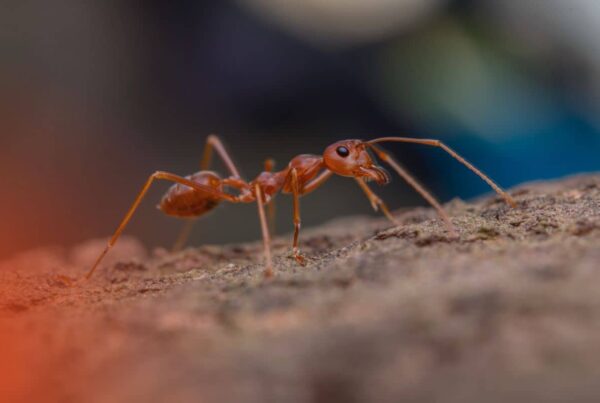
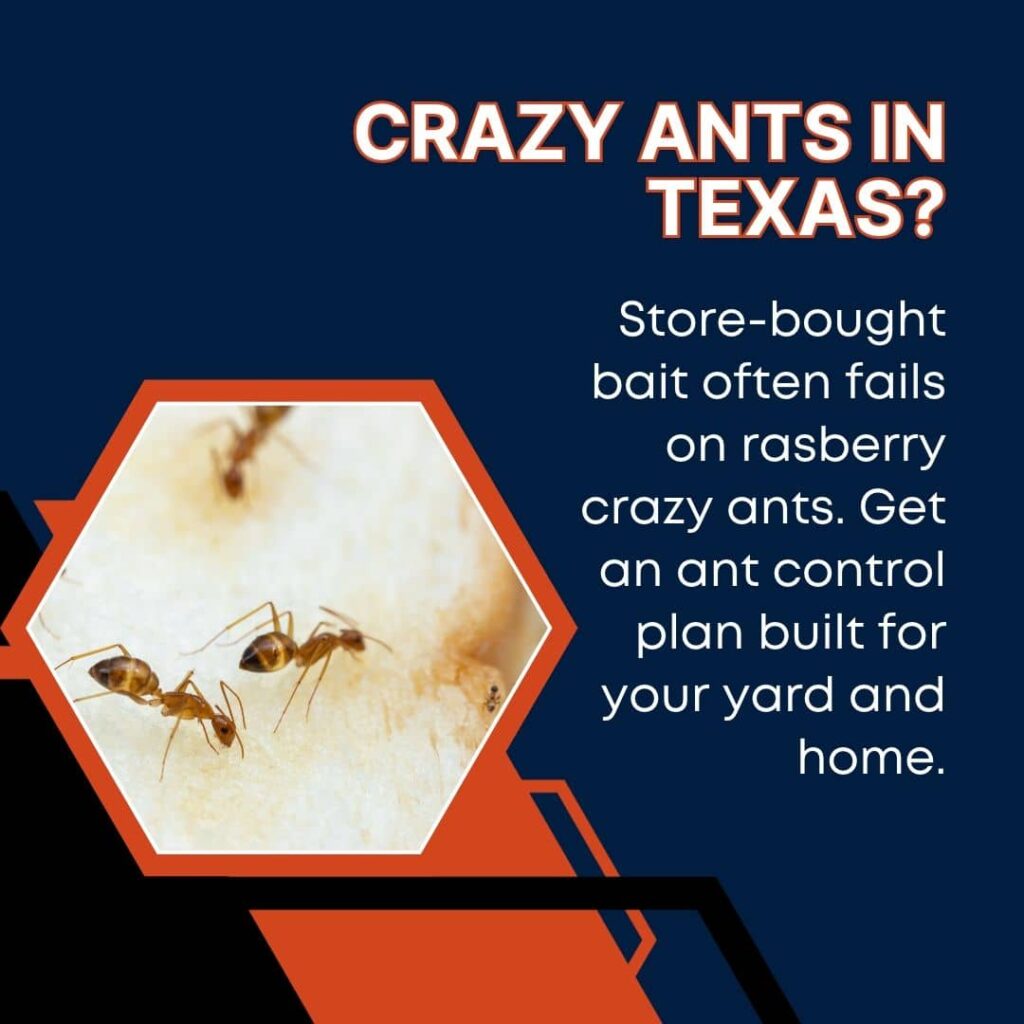
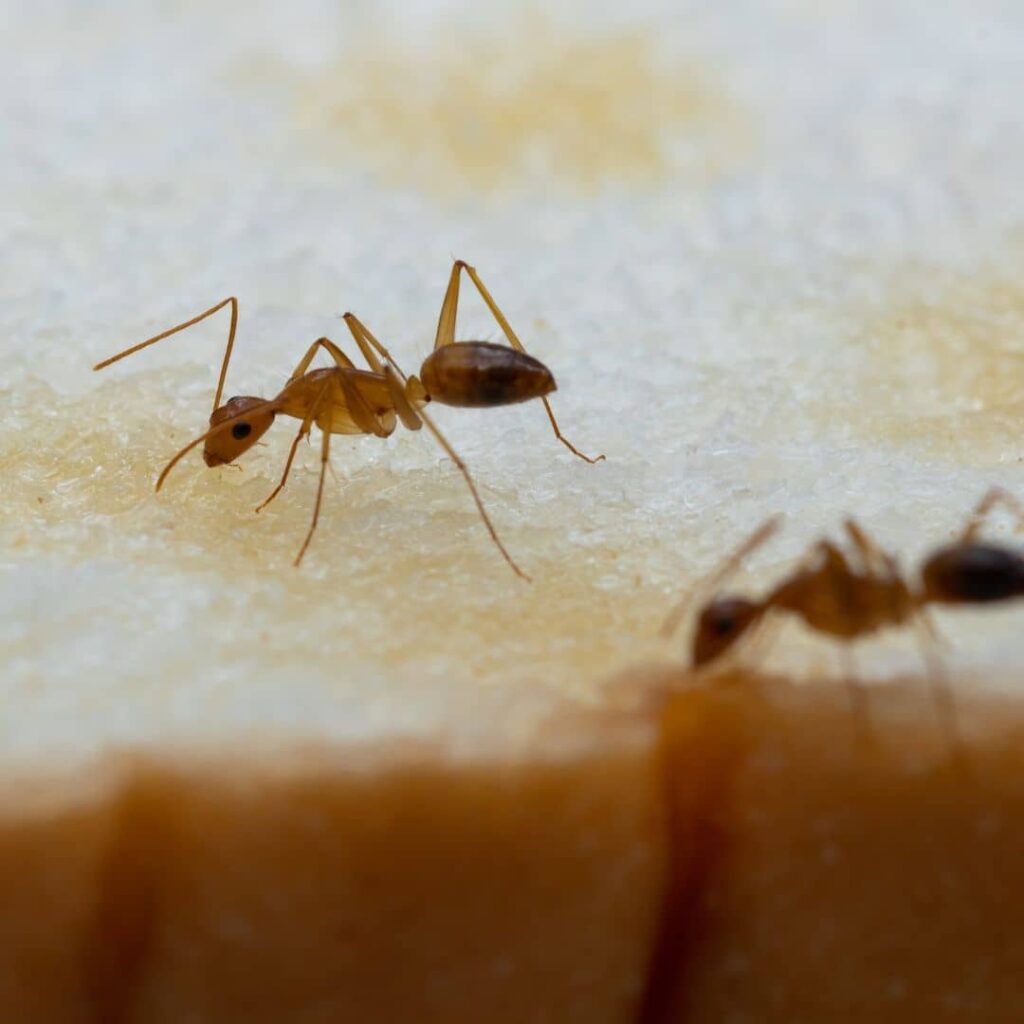
Crazy ants are dark brown, with long legs and long antennae, and they run fast in an erratic way. Look for these signs:
- Dark brown bodies. They are small, so you may need to look closely.
- Long legs and antennae. These make them look leggy and quick.
- Erratic movement. Crazy ants do not march in tidy lines. They dart, turn, and cross each other’s paths.
- Many fine body hairs. They have four pairs of hairs on top of the middle section of the body. This helps tell them apart from Argentine ants.
- Big crowds. Seeing a few dozen in one spot is common. Seeing thousands is a red flag.
If you only see a few ants that march in a neat line, you may have a different kind of ant. For other common Texas pests, browse our pest library.
Where Do Crazy Ants Nest?
Crazy ants nest both indoors and outdoors, and they often infest buildings, especially in the warmer, more humid parts of Texas. That means you can find them inside your home as well as in the yard.
Indoors, check the soil of potted plants. Outdoors, look in shaded, damp spots, such as under planters, stones, and piles of leaves. Check the outside of electrical boxes too, but keep your hands and tools away from live wiring.
Ants go where they can find food, water, and shelter. Moisture problems invite ants and other pests, so damp spots deserve a close look. If you find a trail, follow it back. It can lead you to the spot where they are getting in.
Crazy Ants vs. Fire Ants
Crazy ants and fire ants behave in different ways. Fire ants sting and build raised dirt mounds. Crazy ants can bite, but they do not sting or inject venom.
| Crazy ants | Fire ants | |
|---|---|---|
| Movement | Fast, erratic, zigzag | Steadier paths to and from the mound |
| Sting | Can bite, no sting or venom | Painful sting |
| Nest | Indoors and outdoors | Raised dirt mounds |
| Numbers | Thousands per colony | Large colonies around each mound |
If you are not sure which one you have, take a photo and note where you saw the ants. That gives a technician a head start.
Are Crazy Ants Dangerous?
Crazy ants bite, but they do not sting or inject venom. A bite feels like a tiny pinch and fades quickly. So the pain is not the main concern.
The bigger worry is what they carry. Crazy ants can pick up harmful bacteria from trash cans and dirty objects, then spread it to sensitive areas. That is one more reason to act early.
They can also damage property. Texas A&M says workers can gather in electrical equipment and cause failures. If you find ants packed into outdoor electrical equipment, do not spray liquid into it. Call a professional instead.
Crazy ants could also become a major home pest in places where they spread. A small trail today can turn into a daily fight.
Why Store-Bought Ant Bait Often Fails
Most store-bought ant baits do not work well on Rasberry crazy ants. Texas A&M says most commercial baits do not attract them. A&M also notes that retail products are generally less effective than professional ones.
The colony size makes it worse. AgriLife Today reports that colonies are huge and that ants move back into treated areas. A&M adds that control is difficult and results are usually short-term.
Using the wrong product can also cause harm. Misused do-it-yourself insecticide can hurt your health and the environment. Curious about one common home remedy? Read whether diatomaceous earth kills ants.
Here is what that looks like in a real yard:
- You kill the ants you can see, and more arrive.
- The bait sits untouched.
- Spray clears one trail but does not reach the colony.
- The problem seems solved for a while, then comes back.
If that sounds familiar, the issue is probably not your effort. It is the ant.
What You Can Do Right Now
Simple steps cannot end an infestation, but they can make your home less inviting while you wait for help.
- Keep trash cans clean and tightly closed, since crazy ants pick up bacteria from them.
- Check the soil of potted plants for ants.
- Wipe up sweet spills and keep food in sealed containers.
- Fix leaks and clear standing water near the house. For damp garages, see what to look for in a garage dehumidifier.
- Trim plants and branches that touch the walls or roof.
- Seal gaps around doors, windows, and pipes.
- Keep a few ants in a sealed jar so a professional can identify them.
- Write down where you see the most activity and when.
Ants look for food, water, and shelter. When you take away easy sources, your home becomes less attractive to them. These steps will not wipe out a colony, but they can reduce the number of ants that wander inside. They work best alongside a professional plan.
What a Professional Treatment Looks Like
A professional visit usually starts with a close look at your property. The technician identifies the ant first, since the right plan depends on which one you have. Next comes treatment of the places where the ants live and travel, which often means the yard as well as the house. After that, follow-up visits show whether the ants are returning.
Because colonies are large and ants move back into treated areas, one visit rarely tells the whole story.
Related Questions to Explore
What do crazy ants look like?
Crazy ants are small, dark brown ants with long legs and antennae that run in quick zigzags. They also have many fine body hairs. Larger black ants are likely something else. If you are sorting out which ant or wood pest you have, our guide to carpenter ant and termite droppings covers one common mix-up.
Do crazy ants bite?
Yes, crazy ants can bite, but they do not sting or inject venom. A bite feels like a tiny pinch that fades quickly. The bigger problem is their numbers and the bacteria they can spread.
Where do crazy ants nest?
Crazy ants nest both indoors and outdoors. Indoors, check the soil of potted plants. Outdoors, look in shaded, damp spots near the house.
What kills crazy ants?
For most homeowners, professional treatment is the answer. Most store-bought baits do not attract Rasberry crazy ants, according to Texas A&M. Some products used against them are applied only by licensed pest management professionals.
How do you get rid of crazy ants?
Getting rid of crazy ants usually takes a professional plan with follow-up. Colonies are large, and ants return to treated areas. A pro can identify the ant, treat the right places, and check back to see if the ants return.
Do crazy ants conduct electricity?
The ants do not carry power. The problem is that workers can pile up inside electrical equipment. Texas A&M says that can cause failures. If you see ants in equipment, keep liquids out of it and call a professional.
Do crazy ants come back after treatment?
They can. AgriLife Today reports that ants move back into treated areas, and A&M says results are often short-term. That is why follow-up visits matter more than a single treatment.
When to Call a Professional
Call a professional when ants keep coming back after you treat them, when you find them in electrical equipment, or when you are not sure which ant you have. These are the points where DIY runs out of options.
There are three reasons to make the call:
- Bait often gets ignored. Most commercial baits do not attract Rasberry crazy ants.
- The colonies are huge. Ants move back into treated areas, so a quick spray rarely lasts.
- Some products are restricted. Texas A&M notes that some products used against Rasberry crazy ants are applied only by licensed professionals.
A good visit starts with identifying the ant. Then your technician treats the yard and the home, not just the trail you can see. Follow-up visits check whether the ants are coming back.
Before you call, gather a few details. When did you first notice the ants? Where are they most active? Have you tried bait or spray, and what happened? Are they near electrical equipment? These answers help a technician plan the visit.
Grand Slam Pest Control serves The Woodlands, Conroe, Spring, and other communities north of Houston. See our full list of service areas.
Conclusion
These ants are a hard problem, but you do not have to guess your way through it. A quick ID and a solid plan can save you time, money, and a lot of frustration.
- Crazy ants are small, dark brown, fast-running ants that can show up in the thousands. In the Houston area, the Rasberry crazy ant is the usual one.
- They can bite and spread bacteria, and they can cause failures in electrical equipment.
- Store-bought bait often fails, and professional treatment gives you the best shot at lasting control.
If crazy ants have moved into your home or yard, schedule an ant inspection with Grand Slam Pest Control.